Category Archives: Global Political Economy

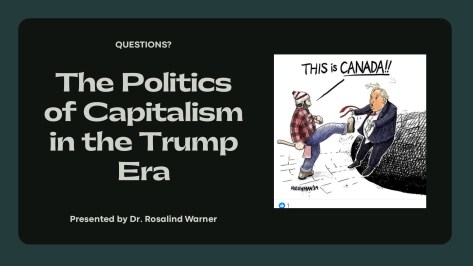
The Politics of Capitalism in the Trump Era

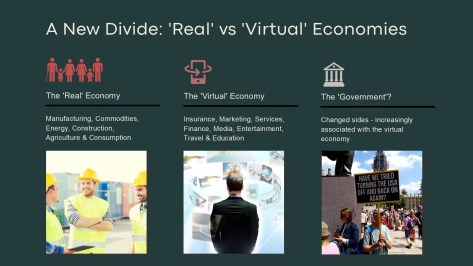
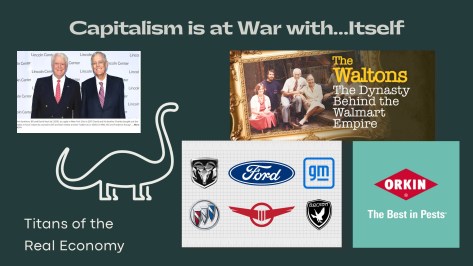
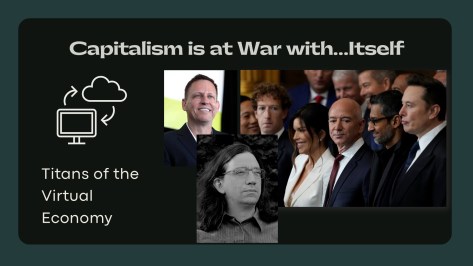
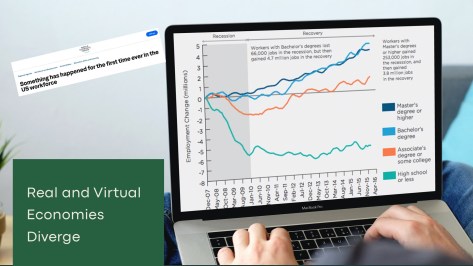
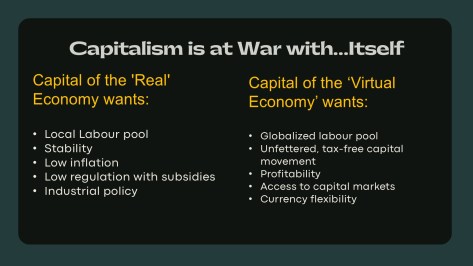
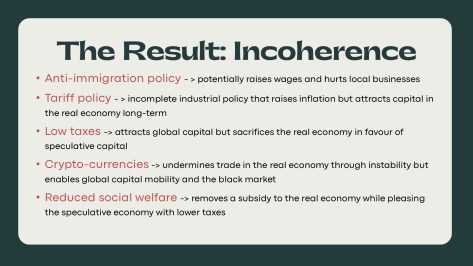
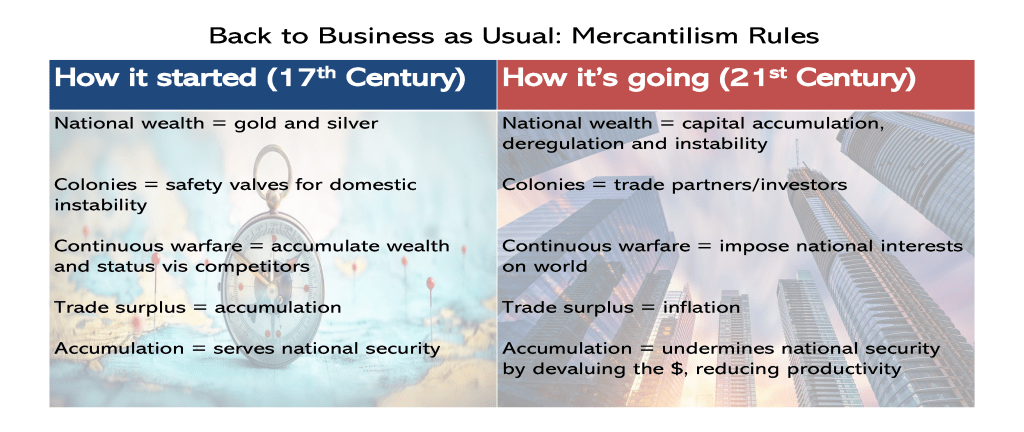
Explore the dramatic evolution of capitalism and its transformation in the Trump era. This talk demystifies what capitalism really is, how it functions, and how it impacts states, global systems, and everyday people. Using a political science perspective, we’ll examine how recent political shifts have challenged old assumptions and reshaped power dynamics.
Astvansh, V. (2025, July 3). Chatbots are on the rise, but customers still trust human agents more. The Conversation. https://doi.org/10.64628/AAM.cep9hdvph

Bell, P. (2024, June 24). Public Trust in Government: 1958-2024. Pew Research Center. https://www.pewresearch.org/politics/2024/06/24/public-trust-in-government-1958-2024/

Cardinale, K. (n.d.). The making of a Tech Authoritarian. From Plato to Trumpism. Retrieved from https://www.lettsjournal.com/p/the-making-of-a-tech-authoritarian

Cloyne, J., Kurt, E., & Surico, P. (2025). Who gains from corporate tax cuts? Journal of Monetary Economics, 149, 103722. https://doi.org/10.1016/j.jmoneco.2024.103722

Guys, T. I. (2025, August 21). The State of AI in the Workplace in 2025: Why 170 Million New Jobs Will Offset the ‘AI Apocalypse’ – A Comprehensive Research Report – The Interview Guys. https://blog.theinterviewguys.com/the-state-of-ai-in-the-workplace-in-2025/

How AI is poised to disrupt the job market. (n.d.). Retrieved 21 November 2025, from https://www.cnbc.com/2025/10/08/how-ai-is-poised-to-disrupt-the-job-market.html

How Tariffs Are Affecting Prices in 2025. (n.d.). Retrieved 21 November 2025, from https://www.stlouisfed.org/on-the-economy/2025/oct/how-tariffs-are-affecting-prices-2025

How Will AI Affect the Global Workforce? | Goldman Sachs. (n.d.). Retrieved 21 November 2025, from https://www.goldmansachs.com/insights/articles/how-will-ai-affect-the-global-workforce

LA Times. (n.d.). Reality TV workers face a bleak job market amid production decline—Los Angeles Times. Retrieved 27 November 2024, from https://www.latimes.com/entertainment-arts/business/story/2024-08-05/the-hollywood-production-collapses-latest-victim-why-the-reality-tv-bubble-finally-burst

Live Science. (2022, May 3). The Universe Could Start Shrinking ‘Remarkably’ Soon, Scientists Say. ScienceAlert. https://www.sciencealert.com/the-universe-could-start-shrinking-remarkably-soon

McDonnell, G. (2015). What Caused Airline Deregulation: Economists or Economics?19(3).

McGreal, C. (2025, January 26). How the roots of the ‘PayPal mafia’ extend to apartheid South Africa. The Guardian. https://www.theguardian.com/technology/2025/jan/26/elon-musk-peter-thiel-apartheid-south-africa

Miao, H. (2020, November 19). Walmart and McDonald’s are among top employers of Medicaid and food stamp beneficiaries, report says. CNBC. https://www.cnbc.com/2020/11/19/walmart-and-mcdonalds-among-top-employers-of-medicaid-and-food-stamp-beneficiaries.html

Ranked: Global Share of Manufacturing Value, by Country –. (n.d.). Retrieved 21 November 2025, from https://www.visualcapitalist.com/ranked-global-share-of-manufacturing-value-by-country/

Real Estate Trends in Canada for 2025: Insights from ULI’s Annual Report. (n.d.). Coldwell Banker Horizon Realty. Retrieved 21 November 2025, from https://www.kelownarealestate.com/blog-posts/real-estate-trends-in-canada-for-2025-insights-from-ulis-annual-report

Review, T. R., & Nichols, J. (2023, July 17). Is It Time to Re-Fuel Airline Regulation? | The Regulatory Review. https://www.theregreview.org/2023/07/17/nichols-is-it-time-to-re-fuel-airline-regulation/

Santos, C. (2024, June 11). Chipotle’s CEO Responded To Claims About Portion Sizes. https://www.buzzfeed.com/claudiasantos/chipotle-ceo-small-portions-response

Saric, I. (2024, August 13). U.S. theme parks are emptier as costs surge and travelers go global. Axios. https://www.axios.com/2024/08/13/theme-disney-universal-parks-visitor-decline

The ‘Enshittification’ of TikTok | WIRED. (n.d.). Retrieved 19 November 2024, from https://www.wired.com/story/tiktok-platforms-cory-doctorow/

The Walton Family: The Dynasty Behind the Walmart Empire. (2023, June 28). https://quartr.com/insights/business-philosophy/the-walton-family-the-dynasty-behind-the-walmart-empire

UJET Research Reveals Chatbots Increase Frustration for 80% of Consumers. (n.d.). Retrieved from https://ujet.cx/press-releases/ujet-research-reveals-chatbots-increase-frustration

US AI revenue in 2025 nearly double closest competitor – analysis. (n.d.). Retrieved from https://finance.yahoo.com/news/us-ai-revenue-2025-nearly-141217858.html?guccounter=1

What’s at Stake in Canada’s Immigration Pullback. (n.d.). Retrieved from https://www.centuryinitiative.ca/news/whats-at-stake-in-canadas-immigration-pullback

Why Nothing Works: Who Killed Progress—And How to Bring It Back | Watson School of International and Public Affairs. (n.d.). Retrieved from https://home.watson.brown.edu/research/research-briefs/why-nothing-works

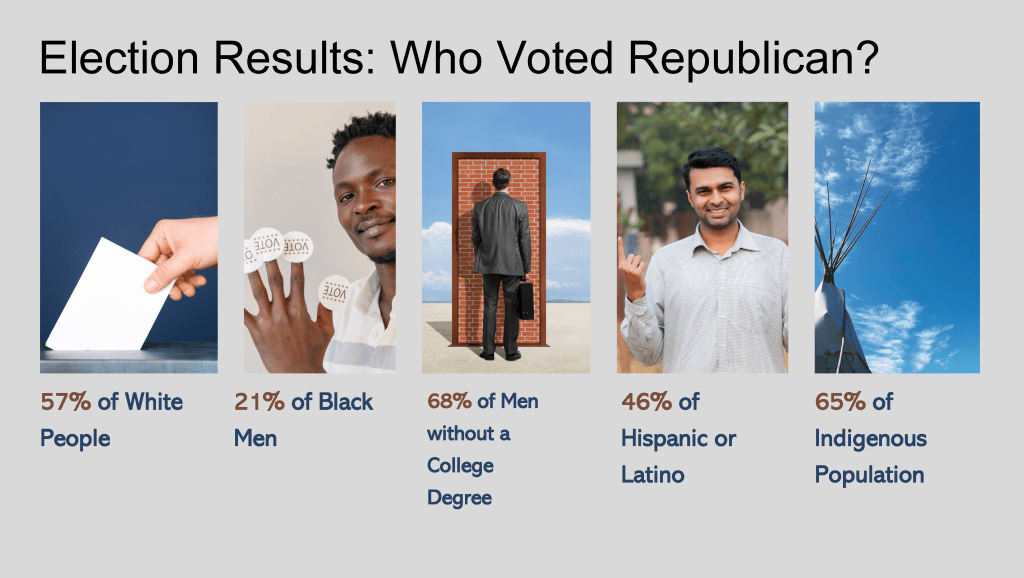
Orchestrating Chaos: Trump and the US 2024 Election

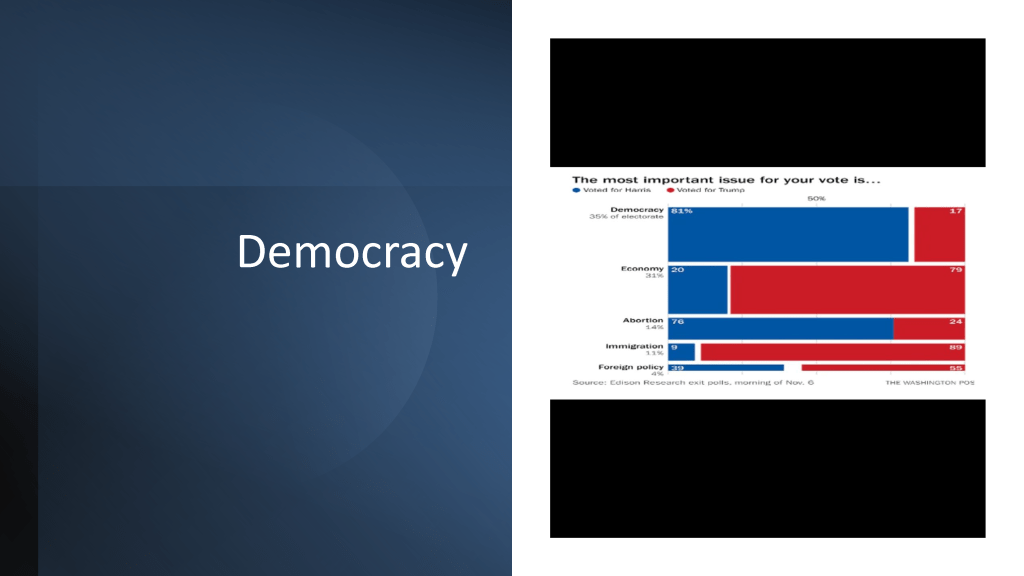
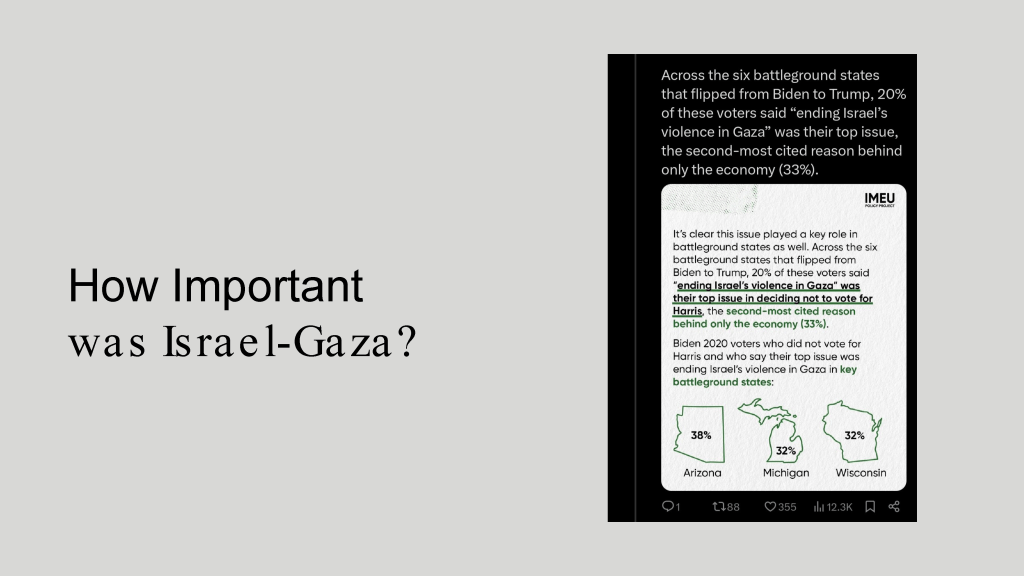
While political scientists know alot, the 2024 election shows that we clearly don’t know everything!  The same can be said for our political leaders.  In this session we will think about what we have learned and what we still need to learn about elections and forming governments in a democracy after November 2024. Talk February 7 2025

Further Reading/Viewing

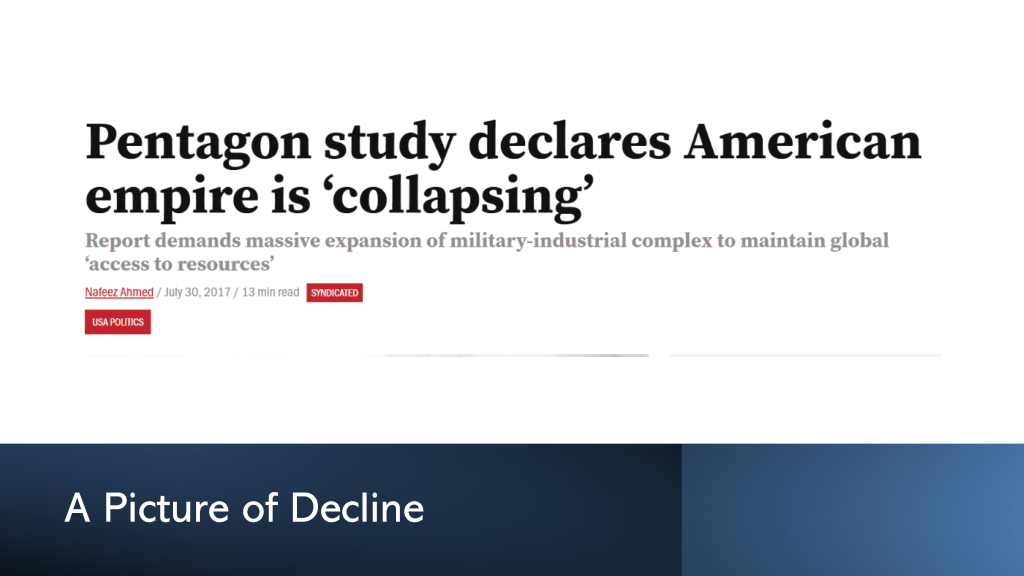
Ahmed, N. (2017, July 30). Pentagon study declares American empire is ‘collapsing’. Canadian Dimension. https://canadiandimension.com/articles/view/pentagon-study-declares-american-empire-is-collapsing

Bambrough, B. (2025, February 2). ‘This Needs To Stop Now’—Elon Musk Confirms Radical Doge U.S. Treasury Plan. Forbes. https://www.forbes.com/sites/digital-assets/2025/02/02/this-needs-to-stop-now-elon-musk-confirms-radical-doge-us-treasury-plan/?utm_source=pocket_shared

Beauchamp, Z. (2024, November 20). The messy contradictions of Trump’s second-term coalition | Vox. Vox.Com. https://www.vox.com/politics/386299/trump-administration-coalition-economic-foreign-policy

Cardinale, K. (2022, May 25). The making of a Tech Authoritarian. From Plato to Trumpism.https://www.lettsjournal.com/p/the-making-of-a-tech-authoritarian

Cosmo (Director). (2025, January 20). The Secret Life of Chaos | Beyond Order [Video recording]. https://www.youtube.com/watch?v=inofGyvshoQ

Dalhousie University (Director). (2024, November 20). The 2024 Stanfield Conversation: The US Election and Democracy’s Global Fate | Dalhousie University [Video recording]. https://www.youtube.com/watch?v=zMgA_oJ3mDE

Danner, C. (2025, February 3). Elon Musk May Have Your Social Security Number. Intelligencer. https://nymag.com/intelligencer/article/elon-musk-doge-treasury-access-federal-payments.html

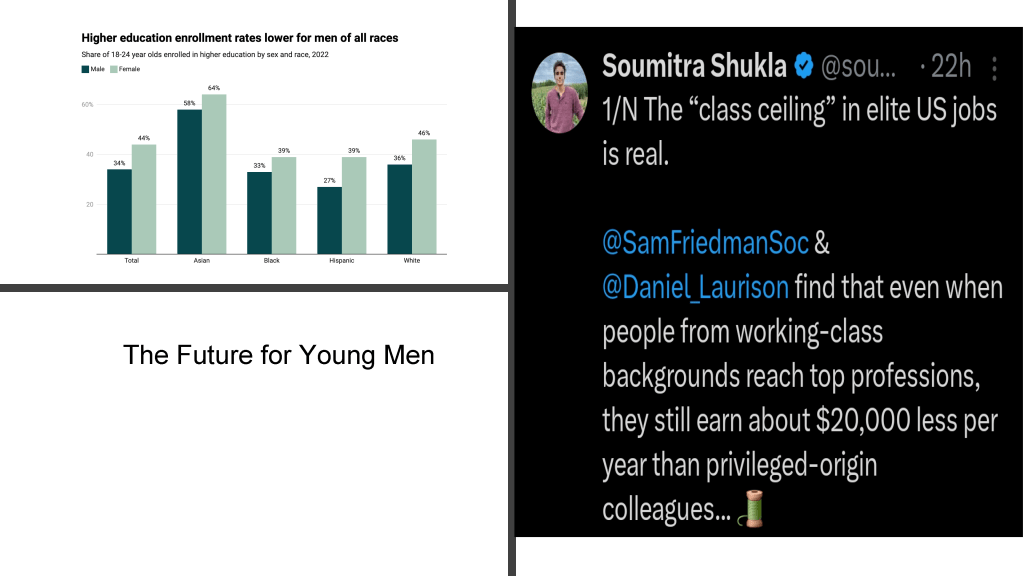
Davis, C. (2024, October 6). Why aren’t we talking about the real reason male college enrollment is dropping? [Substack newsletter]. Matriarchal Blessing. https://celestemdavis.substack.com/p/why-boys-dont-go-to-college

Elliott, V. (2025, February 2). The Young, Inexperienced Engineers Aiding Elon Musk’s Government Takeover. Wired. https://www.wired.com/story/elon-musk-government-young-engineers/

Garcia, I. (2022, October 12). U.S. Senate: Blake Masters dislikes the country’s direction. Cronkite News. https://cronkitenews.azpbs.org/2022/10/12/us-senate-blake-masters-republican-arizona-venture-capitalist/

Jacobs, B. (2022, May 20). How Gen X Became the Trumpiest Generation. POLITICO. https://www.politico.com/news/magazine/2022/05/20/cherie-westrich-alt-rock-gen-x-maga-00033769

Levitsky, S., & Ziblatt, D. (2018). How Democracies Die. Crown Publishers.

McGreal, C. (2025, January 26). How the roots of the ‘PayPal mafia’ extend to apartheid South Africa. The Guardian. https://www.theguardian.com/technology/2025/jan/26/elon-musk-peter-thiel-apartheid-south-africa

McMaster, G. (2024, June 29). Four critical things to know about critical race theory. University of Alberta Folio. https://www.ualberta.ca/en/folio/2022/06/four-critical-things-to-know-about-critical-race-theory.html?utm_source=pocket_shared

Monbiot, G. (2024, January 6). What links Rishi Sunak, Javier Milei and Donald Trump? The shadowy network behind their policies. The Guardian. https://www.theguardian.com/commentisfree/2024/jan/06/rishi-sunak-javier-milei-donald-trump-atlas-network

Reich, R. (2025, January 26). The stunning real story behind Trump’s first week—Alternet.org. Alternet. https://www.alternet.org/trumps-first-week/

Sam Friedman, D. L. (2020). The Class Ceiling. Bristol University Press. https://policy.bristoluniversitypress.co.uk/trade/the-class-ceiling

Schuman, M. (2024, November 9). The American Global Order Could End. The Atlantic. https://www.theatlantic.com/international/archive/2024/11/us-world-power-over-election/680595/

Shapiro, A. (2022, October 3). Come along as we connect the dots between climate, migration and the far-right. NPR. https://www.npr.org/2022/10/03/1125746902/climate-change-migration-far-right-political-extremism

Slobodian, Q. (2023, April 4). The Wonderful Death of a State | Quinn Slobodian. The Baffler. https://thebaffler.com/latest/the-wonderful-death-of-a-state-slobodian

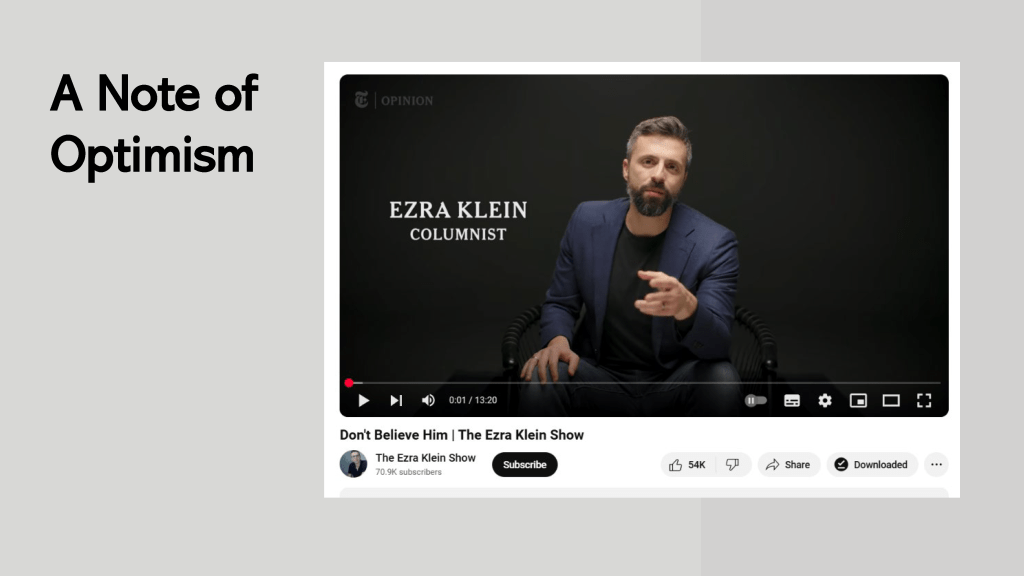
The Ezra Klein Show (Director). (2025, February 4). Don’t Believe Him | The Ezra Klein Show [Video recording]. https://www.youtube.com/watch?v=K8QLgLfqh6s

Tusikov, N. (2025). How Might Trump’s Big Tech Agenda Affect Canada? Centre for International Governance Innovation. https://www.cigionline.org/articles/how-might-trumps-big-tech-agenda-affect-canada/

Waller, J. G. (2022, February 20). Authoritarianism Here? American Affairs Journal. https://americanaffairsjournal.org/2022/02/authoritarianism-here/

Finding the Good: Sharing International Development Ideas and Practice in the Current Era

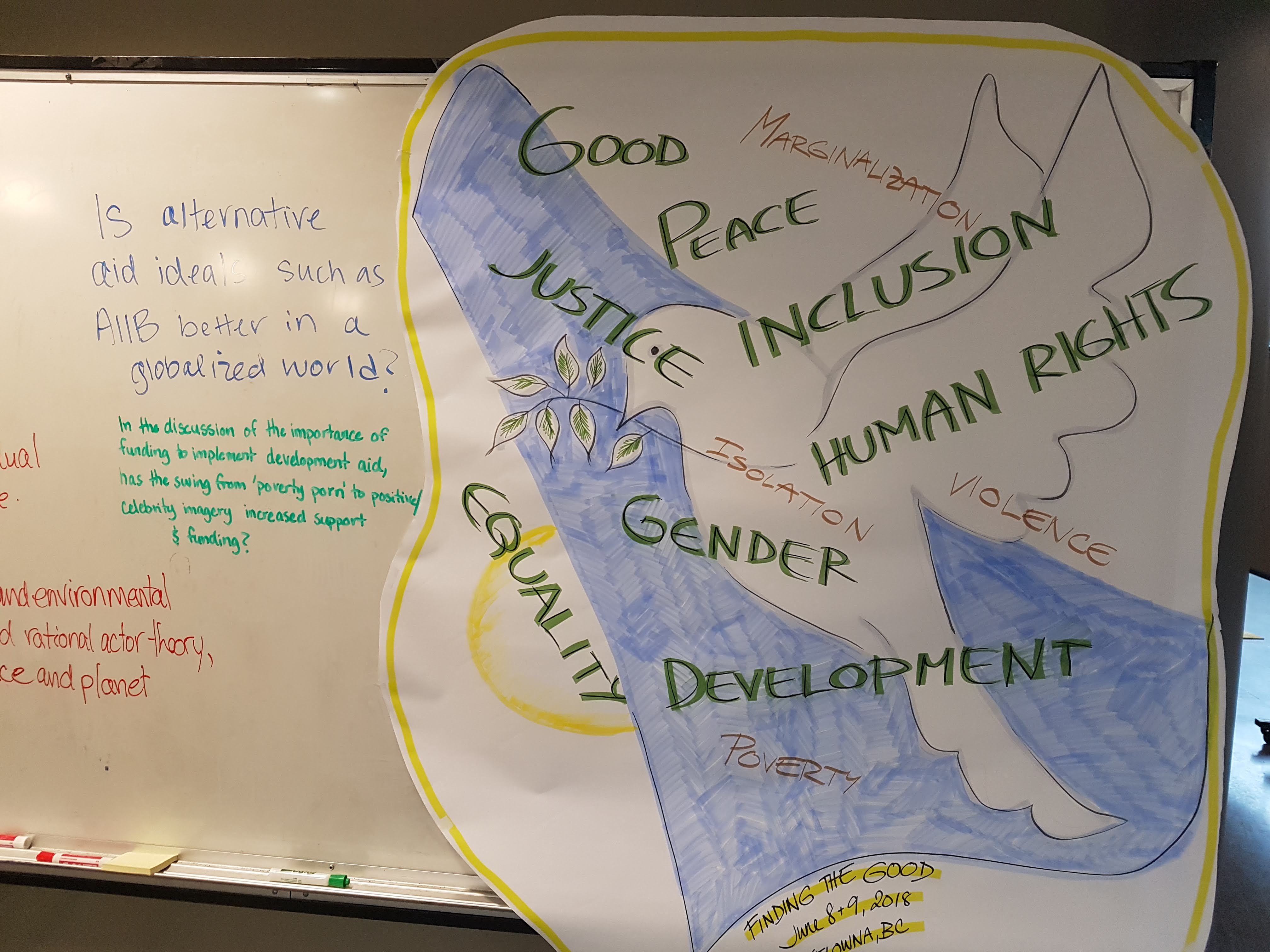
20180609_073819On June 8th and 9th 2018, researchers, students, community members and practitioners gathered at Okanagan College to explore ways of articulating and sharing ethical international development ideas and practices. 50 attendees from across North America joined with leaders locally at Okanagan College’s Kelowna campus for an intensive 2-day conference and dialogue on equality, inclusion, and human dignity. Scholars and practitioners interacted in engaging sessions on gender, local governance, corporate social responsibility (CSR) and the United Nations Sustainable Development Goals (SDGs).

Keynote speaker Chloe Schwenke, former Director of the Global Program on Violence, Rights, and Inclusion at the International Center for Research on Women (ICRW), shared her experiences advocating for a human rights framework for development in the Obama Administration. A second Keynote with Michael Simpson, Executive Director of the BC Council for International Cooperation, built on the themes of leadership and change in a ‘Talkshow’ style interview that engaged the audience in generating new avenues of inquiry.

In addition to providing a summary resource to share the highlights from the two day Conference, the purpose of these Proceedings is to contribute toward a network in which dialogue between scholarly insights and practical development work can improve the participation of people experiencing poverty, social marginalization, discrimination, and oppression both at home and abroad.

For more information and to view the Proceedings, visit the Conference webpage.

Click here for the Conference Proceedings.


Trump and the US(S) Titanic (Talk)

Enjoy my talk on March 11th at Okanagan College in Penticton!  Since the mid-20th century observers have been debating the rise, peak and decline of the United States as the world’s leading superpower. In this session, we will go beyond Trumpism to look at the deeper underlying economic, political and social factors that have led up to the current era of US leadership (or lack of), and ask what might be the impact of these changes on the rest of the world, especially Canada. Is the US in decline? What might that ‘look like’ in the years to come? How bad (or good) can it get?

References

Beckley, M. (2017). The Emerging Military Balance in East Asia: How China’s Neighbors Can Check Chinese Naval Expansion. International Security, 42(2), 78–119. https://doi.org/10.1162/ISEC_a_00294
Beckley, M. (2012). China’s Century? Why America’s Edge Will Endure. International Security, 36(3), 41–78. https://doi.org/10.1162/ISEC_a_00066
Borger, J. (2014). Risk of nuclear accidents is rising, says report on near-misses | World news | The Guardian. Retrieved March 8, 2019, from https://www.theguardian.com/world/2014/apr/29/nuclear-accident-near-misses-report
Devlin, K. (2018). Foreign affairs experts, U.S. public agree: America is less respected globally | Pew Research Center. Retrieved March 8, 2019, from http://www.pewresearch.org/fact-tank/2018/12/17/international-relations-experts-and-u-s-public-agree-america-is-less-respected-globally/?amp=1&__twitter_impression=true
ERlanger, S., & Bennhold, K. (2019). Rift Between Trump and Europe Is Now Open and Angry – The New York Times. Retrieved March 8, 2019, from https://www.nytimes.com/2019/02/17/world/europe/trump-international-relations-munich.html
Faturechi, R., Rose, M., & Miller, T. C. (2019). Years of Warnings, Then Death and Disaster: How the Navy Failed Its Sailors. ProPublica.
Friedberg, A. L. (2018). Competing with China. Survival, 60(3), 7–64. https://doi.org/10.1080/00396338.2018.1470755
Gold, H. (2019). The U.S. Is Getting Closer to a Recession, Data Show – Barron’s. Retrieved March 8, 2019, from https://www.barrons.com/amp/articles/the-u-s-is-in-the-late-stages-of-expansion-data-show-51549642305
Jacques, M. (2012). When China Rules the World. Penguin.
Klein, E. (2011). Ezra Klein – The U.S. Government: An insurance conglomerate protected by a large, standing army. Retrieved March 8, 2019, from http://voices.washingtonpost.com/ezra-klein/2011/02/the_us_government_an_insurance.html
Long, H. (2019). A record 7 million Americans are 3 months behind on their car payments, a red flag for the economy – The Washington Post. Retrieved March 8, 2019, from https://www.washingtonpost.com/business/2019/02/12/record-million-americans-are-months-behind-their-car-payments-red-flag-economy/?utm_source=reddit.com&utm_term=.1fc9b4020266
Mahbubani Kishore. (2009). The New Asian Hemisphere.
Nougayrede, N. (2019). Why Trump and his team want to wipe out the EU | Natalie Nougayrède | Opinion | The Guardian. Retrieved March 8, 2019, from https://www.theguardian.com/commentisfree/2019/feb/18/trump-pompeo-bolton-eu-eastern-european-states
Quackenbush, C. (2019). U.S. Slips Out of Top 20 in Global Corruption Index | Time. Retrieved March 8, 2019, from http://time.com/5515195/united-states-slips-corruption-index/
Reuters. (2019). $1.5 trillion U.S. tax cut has no major impact on business capex plans: survey | Reuters. Retrieved March 8, 2019, from https://www.reuters.com/article/us-usa-economy-investment-idUSKCN1PM0B0
Sammon, A. (2019). Elwood, Illinois (Pop. 2,200), Has Become a Vital Hub of America’s Consumer Economy. And It’s Hell. | The New Republic. Retrieved March 8, 2019, from https://newrepublic.com/article/152836/elwood-illinois-pop-2200-become-vital-hub-americas-consumer-economy-its-hell
Schweber, N., & Miller, T. C. (2019). In Navy Disasters, Neglect, Mistakes, and 17 Lost Sailors. ProPublica.
Shifrinson, J. (2018). The rise of China, balance of power theory and US national security: Reasons for optimism? Journal of Strategic Studies, 1–42. https://doi.org/10.1080/01402390.2018.1558056
Tanzi, A. (2019). U.S. Student Debt in `Serious Delinquency’ Tops $166 Billion – Bloomberg. Retrieved March 8, 2019, from https://www.bloomberg.com/news/articles/2019-02-16/u-s-student-debt-in-serious-delinquency-tops-166-billion
Wright, T. J. (n.d.). All measures short of war : the contest for the twenty-first century and the future of American power.
Zakaria, F. (2009). The post-American world.

Is the World Getting Better or Worse (Talk)?

This presentation takes a practical look at recent trends in the world and analyze whether the world is getting better or worse. We will look at trends in democracy, human rights and freedoms, economic growth and inequality, environmental degradation and climate change, human health, population, and governance, among others.

The “SDG Wave” in the Central Okanagan

The following post appeared on The Wave blog by BC Council for International Cooperation

Canada and Trade: The Mouse and the Elephant (Talk)

Canada’s Role in a Changing World

The liberal international order (LIO) has been in place for half of Canada’s 150-year existence and Canada has been an integral part of it from the beginning. As one of the founding members of this order Canada has a stake and a role in preserving international law, peace, prosperity and human rights. However, the LIO is under stress. What will be Canada’s response to a new era of diverse challenges? From the U.S. effort to abandon NAFTA to the challenges of terrorism and environmental breakdown, Canada’s capacities are being put to the test. This session will open a conversation about Canada’s strengths, weaknesses, opportunities and threats in a world of rapid and unexpected change.

The ‘Myth’ of Taxpayers’ Rights

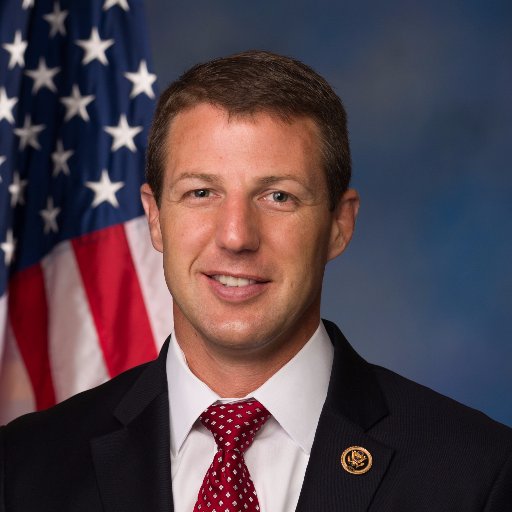
In April, US Representative Markwayne Mullin (R-OK) had a tough town hall.   Upset about the Trump legislative agenda, constituents called Mullin to task as a public employee.  His unscripted response was to complain about their questions and to argue that the idea that taxpayers pay his salary was ‘bullcrap’.   He went on: “I pay for myself…I pay enough taxes where before [sic] I ever got there, and continue to for [sic] my company and pay my own salary.” Mullin further claimed that his job as a public servant was an ‘honor’ and that his wealth and position as a business leader gave him a special freedom and independence from government.  This independence from financial ties, in turn, bolsters his credibility as a critic of government encroachment.

Is Public Service a Contract?

His argument opens an intriguing window on the way that public service (and, by extension, government) is being recast.   While there is a striking & stark contradiction between claiming to both represent taxpayers and to be free from accountability to them, Mullin kind of had a point—–Do ‘taxpayers’ (as a group, and aside from ‘citizens’) actually have rights? Is public service a kind of contract of service, in which representatives agree to provide a necessary ‘good’ in exchange for a fee (salary paid by taxpayers)?

I want to say no, that is not the essence of public service. Public service should not be reduced to little more than a commercial exchange or contractual relationship, it is also a relationship of trust.  Logically, then, to some extent I (gulp) agree with Mullin that it is a service and a privilege.  This is not to say that there is no contractual dimension to public service, however.  Ever since Rousseau wrote about the Social Contract in the 18th century, governments and citizens have expected a relationship of mutual accountability.  For Rousseau, however, the social contract was a metaphor for the larger relationship of mutual obligation that government rested upon; in particular the obligation of the state to its citizens. Therefore, the relationship between the public and public servants does have a contractual dimension. So, if it is not only a contract, what else is it?

The Origins of Taxpayers’ Rights

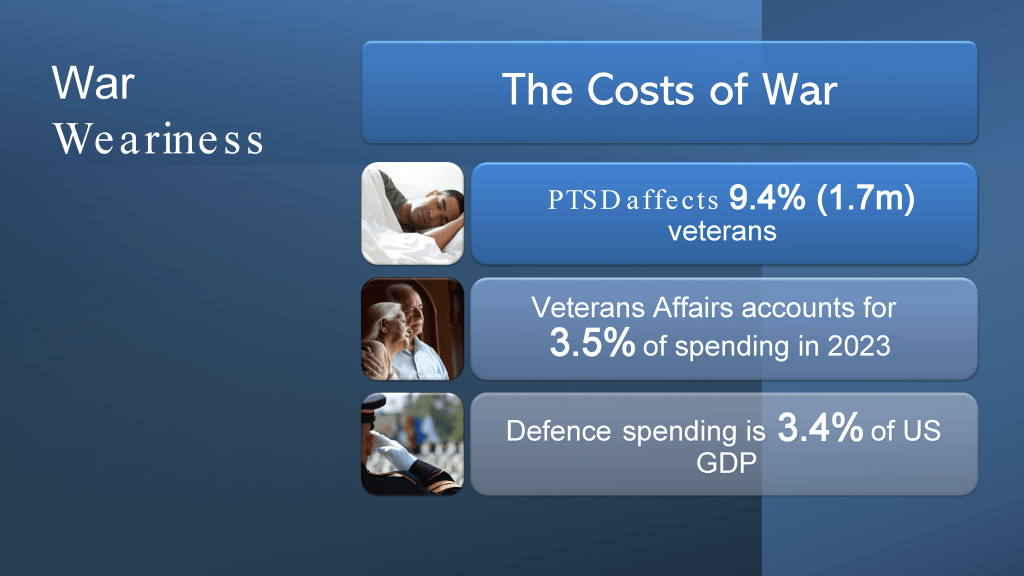
Prior to the widespread institution of income taxes as a primary revenue source for modern administrative governments, most governments gained the vast majority of their revenue from taxes on trade.  The famous Boston Tea Party protest was against the unfair tax rate on a commodity (tea) and the legitimacy of the Crown’s right to tax commerce without accountability to traders.   Eventually, of  ourse, taxes became imposed on other dimensions of economic activity, include labour and capital gains.  What drove governments to reach beyond trade to enrich their treasuries was war. War required governments to raise funds to field military forces at a competitive level to other states.  War also brought conscription, wherein the sons of the poor were required to invest their lives in the security of the state.  Conscription without representation was just as untenable as taxation without representation, however. With new demands from the state, the state also had to provide new opportunities for returning veterans, which in turn necessitated higher taxes to provide housing, care, education and a safety net.  In truth, the extension of the tax base to all income earners relieved business of the bulk of the tax burden, and business benefited from the security provided by the state.  Security provided great opportunity for economies to grow and globalize.

Paying taxes does and should produce a set of obligations on the part of the government to respect the public interest

Asking the people to expend blood and treasure on war meant that there was an implied responsibility on the part of the state to provide social services to the people.  Taxpayers could expect that public servants would expend public treasure for the public good, not for the interests of business alone.  Underlying the arrangement was a semi-contractual kind of language: taxpayers could expect to be able to exercise their democratic rights to ‘check’ irresponsible governments; and governments could expect citizens to be devoted to the support of the state in war, and in peace.

Clearly, this calculus has changed.  The reasons for this are numerous, not least that conscription has been eliminated and war is fought very differently, but it is still undeniably the case today that paying taxes does and should produce a set of obligations on the part of the government to respect the public interest.

Taxpayer Rights Versus Taxpayer Interests

Paying taxes does not only create a contractual relationship, it also binds taxpayers to their community, giving them a stake in a common future and ensuring thier engagement in public life.

This is not, however, the same as saying that taxpayers per se have rights, over and above their interests as members of the public.   A ‘right’ implies a claim to greater respect and recognition over and above the interests of other groups.  A ‘right’ is a trump card that all other interests, and government, must respect.   Taxpayers as a group are entitled to a voice and to express their interest as a group.  An ‘interest’ implies a competition in the marketplace of ideas in which any one group’s desires may reasonably and fairly be considered over and above others, within the framework of laws that otherwise encourage respect for fundamental rights. Taxpayers, like retirees, patients, business owners, students, workers, and other groups, have interests, but not rights. Ethnic minorities, religious minorities, the disabled, the press, and the public, on the other hand, have rights that may override taxpayers’ interests, and that may necessitate that government prioritize these considerations over others.

The Recasting of Government in the New Agenda

What the new agenda overlooks is that paying taxes does not only create a contractual relationship, it also binds taxpayers to their community, giving them a stake in a common future and ensuring thier engagement in public life. This is what makes Mullin’s position so problematic. Mullin is not making his defence from the standpoint of a citizen with a common stake in the public good, nor even as a servant (despite his calming words about ‘service’ and ‘honor’). His defence is one of a taxpayer, and more particularly, as a business owner.  Ultimately the whole conversation ends up being an argument between taxpayers, not citizens.  Arguing that taxpayers have unique contractual rights essentially gives them permission to disengage from the social contract as a whole, especially those parts of it that don’t directly serve their interests.  In turn, and by extension, governments are then relieved of their obligations to the public, including the provision of security and welfare.  While taxpayers have the democratic right to defend their interests, they do not have the right to disrupt the social contract to this degree. When The Fraser Institute and the Canadian Taxpayer’s Federation argue that taxpayers either work for themselves or for the govenment, they feed in to the idea that taxpayers have special rights.

When citizens at the Town Hall demand that governments should respect taxpayers, then decision makers should listen. However, taxpayers should not have a louder voice than citizens.  Taxpayers ‘rights’ should not be extended to the degree they disrupt the larger social contract.  If they do, then the democracy is at risk of eliminating itself by undermining the contract of service and trust, and, incidentally, by bankrupting the state.  There is some evidence that the US has already begun to do this.  Since the language of taxpayers’ rights essentially marginalizes any public interest from the conversation, it is incapable of constructing a new social contract.  The language of taxpayers’ rights then becomes essentially self-destructive, since taxpayers will end up undermining, in the end, their own claims to the rights and benefits of citizenship.