
President Barack Obama launched a new plan to create jobs last week. Although Obama’s speech was not about the environment but creating jobs, underlying it was the implicit premise that there is an unequivocal synergy between government spending on clean energy, increases in economic growth, and job growth. But how are jobs and the environment related?
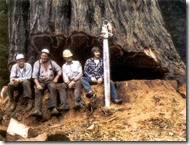
Sometimes there is a stark conflict between jobs and the environment: for example, protecting old-growth forests means that some foresters may have less work, full stop, end of story.
However, more often, the choices are less stark, and more complex. Building wind turbines means using plastics, steel, energy, and other materials that must come from nature in the here and now. Building turbines may create fewer jobs in the short term than (for example) drilling for oil. On the other hand, building turbines now may help reduce the reliance on oil in the future. This would, paradoxically, increase job losses in the fossil fuel industry. On the other hand, employment from wind production is less subject to declines in the supply of the resource, since wind is, in theory, not limited in supply the way that oil is. On so it goes.
 What I want to argue is that both unemployment and environmental degradation are functions of the same problem: the way in which capitalist economies produce wealth. Unless the fundamentals are addressed, meaning changes in the way that work and nature are imagined and valued, then governments will be able to do little to solve either problem.
Both work and nature in capitalism are what is termed ‘factors of production’. This means that, essentially, the application of work to nature is what makes production of goods happen. John Locke was among the first thinkers to elaborate this idea, arguing that the mixing of labour with nature produced property rights and ownership. Others, like Karl Marx, also postulated that work and nature combined together to create value (although emphatically not a right to property) and in fact Marx attributed the value of all goods to the amount of labour included in its production. The relative neglect of nature, and the resulting environmental and resource degradation, is to a large degree what has driven the environmental movement in the West since the beginning of industrial capitalism in the 17th century.
Industry and factories in the Industrial Revolution required, and voraciously consumed, both work and nature. In the process, through the adept use of technology, politics, and the forces of supply and demand, industrialists were able to ensure that their costs were kept low and the prices of goods high. The effect of the productive forces of capitalism was to progressively and systematically devalue both nature and work as factors in the value of goods. The disconnect between work and nature therefore became one of the key features of industrial capitalism.
The devaluation of work and the devaluation of nature in production have now reached a crisis point. Since there is not a US economy or a German economy or a Chinese economy but a global economy, the same factors that devalue work in China also devalue the work of thousands of middle-class Americans and Canadians who production has become, not less efficient, but more efficient, in the process of adding work to nature. Efficiency has, perversely, increased waste by making workers redundant and nature incidental to the calculation of wealth.
The disconnect between nature and work, and the devaluation of both, has been accompanied by distorting imbalances in economic activity: the havoc wreaked upon the value of thousands of people’s work (in the form of homes, infrastructure, and businesses) by a hurricane is counted as a plus in the national accounts, because it makes possible more production rather than less. The manufacture and monitoring of weapons of mass destruction becomes a productive activity, since the damage it potentially causes is discounted, omitted from the national accounts that focus solely on the present value of the application of work to nature. Drilling for oil and even cleaning up an oil spill becomes productive work, while taking measures to prevent the spill and protect oil workers is counted as a cost, and so is devalued. Oil companies roll in profits, while governments compensate them for their costs, feeding the devaluation cycle.
 So, the problems of unemployment and the problems of environmental degradation are related. However, increasing economic growth with little attention to the devaluation of nature will not solve unemployment in the long term, since it activates the very forces that devalue both work and nature. Unemployed workers, like ecosystems, represent overutilized and undervalued factors of production. As long as growth is calculated in a way that devalues work and nature, then governments will continually play catch-up to try and make up the difference. Ultimately, as we are seeing, government’s efforts to bridge the gap, in the form of payroll tax cuts and spending for stimulus, become devalued themselves. Subsidizing the costs of these inputs in the production process makes them less, not more, valuable for industry. Valuing nature for the ecosystem services it provides, and valuing work for the usefulness of the goods it produces, ultimately improves efficiency and reduces the waste, both human and natural, that capitalism creates.
For more: Worldwatch Institute “Valuing Nature’s Services Today is an Investment in the Future” September 14th, 2011

 Dr. Rosalind Warner
You must be logged in to post a comment.