

Its been a tough time for practitioners of what I’ll call the Social Arts & Sciences, and for analysts of political affairs. For example, reputable pollsters were totally wrong in predicting the election of 2016, pretty much destroying any confidence in the utility of analytical methods like survey research. Of course, most consumers of polling data can’t be expected to know the difference between the use and interpretation of quantitative data for research, and the kinds of reckless extrapolation that posed as expert and authoritative analysis leading up to the election. So, it seems that social scientists have some tasks to do. As a community of thinkers and teachers about social affairs, the Social Arts & Sciences have a unique set of tools for understanding world events that can shed light on important questions. Like any tool, the value of analytical methods is only as good as the use they are put to.
Illuminating who we are as social beings, and why we do what we do, can bring improvements to our shared experience by enabling changes in social behaviour through learning, but only if done carefully and deliberately, and with a great deal of humility and caution. I’d suggest these following lines of inquiry, but what I can’t do is help sounding like a stuffy, elitist, out of touch intellectal to some. This is an occupational hazard, but one I’ll have to live with. Sorry about that. Here are some lines of inquiry suggested by recent events:
1. Political Science
Ok this one’s mine. Please, political scientists, explain clearly the difference between democracy and liberal democracy. Liberal democracy is a paradox, since the rule of law and constitutional protection of human rights necessarily limits democratic rule. Another way to think about it is that minority protections make democracy possible by ensuring that the people do not abuse their power, and in the process, potentially vote themselves out of power. Law needs democracy and democracy needs law. They are inextricably bound together. The rights of minorities are integral to the maintenance of democracy, not an add-on that can be jettisoned in the name of the majority or for the sake of convenience. Protecting minority rights is what enables democracy to function, and to sustain itself. Compromising minority rights inevitably compromises democracy itself. Protecting minority rights protects everyone.
While we’re at it, please explain what polls actually measure, what they don’t measure, and what their limitations are (and I don’t mean margin of error). Everyone: (yes that means you)…I’m sorry, but you have to take statistics. We all did it, so you have to too. There.
I’m throwing questions about the Electoral College to the historians. It makes no sense.
A bonus suggestion for Philosophy: help everyone understand paradoxes better.
 2. Gender and Womens’ Studies
I would like to understand better the dynamics of ‘alpha male’ social behaviour. I don’t even know if that’s a thing, but it kind of looks like what we’ve been observing. If I’m wrong, can you please school me in another way of understanding why so many thinking, otherwise respectful people (men and women both) willfully compromise themselves and their values when faced with powerful but flawed male figures? An extra job for sociologists: help us truly understand the centrality of identity to pretty much everything.
3. Psychology
Following the 2008 economic crisis, a new subfield of Economic Psychology flourished to help explain why otherwise rational actors made irrational decisions, even against their own interest, and under what circumstances. I think we need more of that. Can psychology help us understand more about the dynamics of voter decision making, the processes of skapegoating, and the emergence of in-group and out-group division? What is the role of emotion as a motivation for decision making? We know that strong emotion can interfere with rational decision making, but how might this dynamic work at a community level?
4. History
Please keep telling analogous stories from the past to help give context to the problems of the day. Each generation still generates its own version of problems and solutions, but if people saw their issues as common and not unique, they might be better able to think creatively about how to apply the wisdom of the past to the present. Also, please focus as well on the peaceful, constructive periods of history where nothing much happened. The boring bits are what we can learn from. As well, can you please help us understand better what happens during times of accelerating and rapid change so societies can learn to be more adaptive? I have a feeling we’re going to need that.
5. Communications
Ok so you’ve got lots of work ahead…..propaganda has gone viral, driven not by large organizations but by individual users. Consumers are now transmitters. Conversations are immediate and global. Has the speed of communication outpaced democracy? Please talk to the psychologists about the effects of this on thinking, can we know more about how our social lives and worlds create our reality?
6. Artists and Writers
Please keep reminding us what it’s like to be someone else. Touch our hearts with stories of people and places different from our own experiences, so that we can develop empathy and awareness, even for a minute. Teach the teachers how to convey this effectively. Educate all of the social scientists about the importance of empathy to learning and growing and advancing knowledge about the world and ourselves. Ultimately, this is the only way humans truly learn.

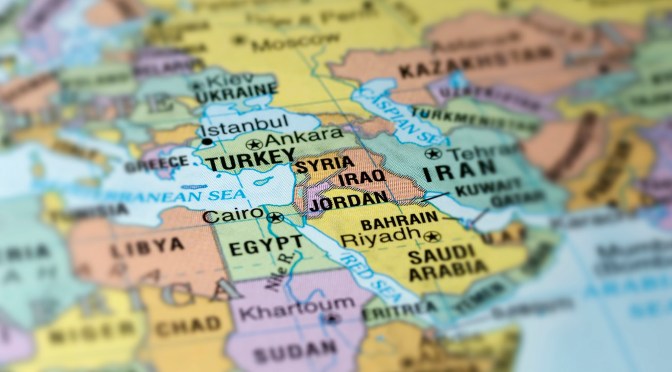
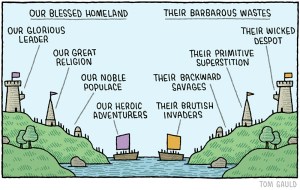 This background helps us to understand more clearly the landscape of political arguments going on now around migrants, as well as the ways in which the rules are being interpreted and applied. It also allows us to recognize the limitations of these rules, in particular the ways in which these rules have arbitrarily divided humanity into categories that systematically de-humanize them and construct them as ‘strangers’, outside of the ‘families’ created by states. The insistence on the application of these rules by state leaders reveals their emptiness. Insisting that migrants register in the first country of arrival, that they be registered in order to apply for further transit, and that they somehow demonstrate and document that their movements are involuntary, are levers designed to ensure that they remain outside of the national family, not that they be embraced by the protections of refugee law. Insisting that the solution to the problem is to ‘solve the Syrian conflict’ or ‘eliminate ISIS’ is similarly meant to distract from the fact that migrants have already waited 4 years or longer for the world to do something to help them, and that many thousands of refugees remain in countries closer to their countries of origin in the hope that they may be able to eventually return. Some of these host countries, including Turkey, have been unwelcoming and hostile to their presence, driving them further afield to find sanctuary. The insistence that migrants be prevented from ever settling in their countries of refuge ignores the legal invocation that they not be refouled back to danger. The legal distinction between ‘economic migrants’ and ‘refugees’ is increasingly nonsensical, and the insistence on respecting it only reveals the arbitrariness of the categories.
 embrace of strangers into a larger family. The next step is to build on the initiatives begun by states to encourage the expansion of the national family and to begin to challenge the arbitrary categories that divide humanity up. The human willingness to challenge the separation created by distance has communicated empathy throughout the state system. What remains is to communicate this to states in the future through new laws that strengthen human ties rather than state rights.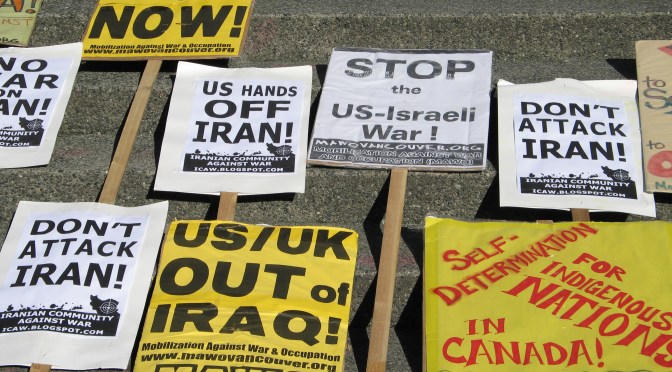


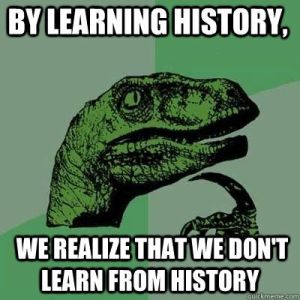 when information is contradictory. Individuals often go to great lengths to overcome the discomfort, including ignoring contradictory information, oversimplifying the facts, and narrowing the frame of reference. Try to recognize these strategies in yourself and others. Try to become comfortable with contradiction, blurriness, messiness, and complexity.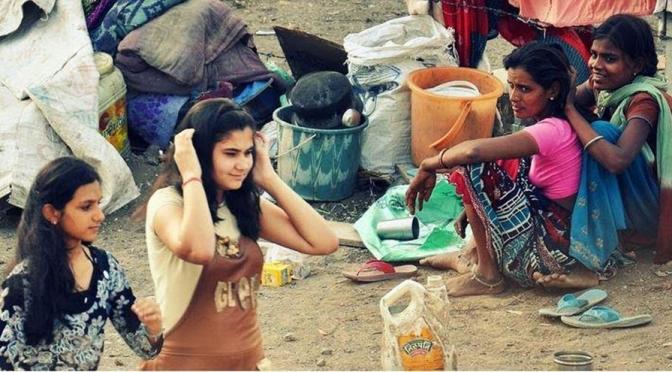

 The incomes of the music industry managers have survived the recent purge caused by the technological challenges. They have survived for a reason: it is their machines that generate the wealth, rather than the luck or talent of the artists. Ultimately, as Krueger suggests, ‘luck’ and the perception of popularity have a huge impact on success in the music industry, but ‘luck’ is not some impartial uncertain or random arbiter of fortunes, since success comes through the perception of popularity, which is heavily influenced by these industrial complexes.
 In Egypt this past summer, former president Hosni Mubarak and former interior minister Habib El-Adly were sentenced to life in prison for complicity in the murder and attempted murder of protesters in the 2011 uprising that removed Mubarak from power. In Liberia, Charles Taylor was convicted of war crimes and sentenced to 50 years for aiding Sierra Leonean rebels who raped, maimed, and murdered tens of thousands of civilians (


You must be logged in to post a comment.