Tag Archives: politics

Orchestrating Chaos: Trump and the US 2024 Election

While political scientists know alot, the 2024 election shows that we clearly don’t know everything!  The same can be said for our political leaders.  In this session we will think about what we have learned and what we still need to learn about elections and forming governments in a democracy after November 2024. Talk February 7 2025
Further Reading/Viewing

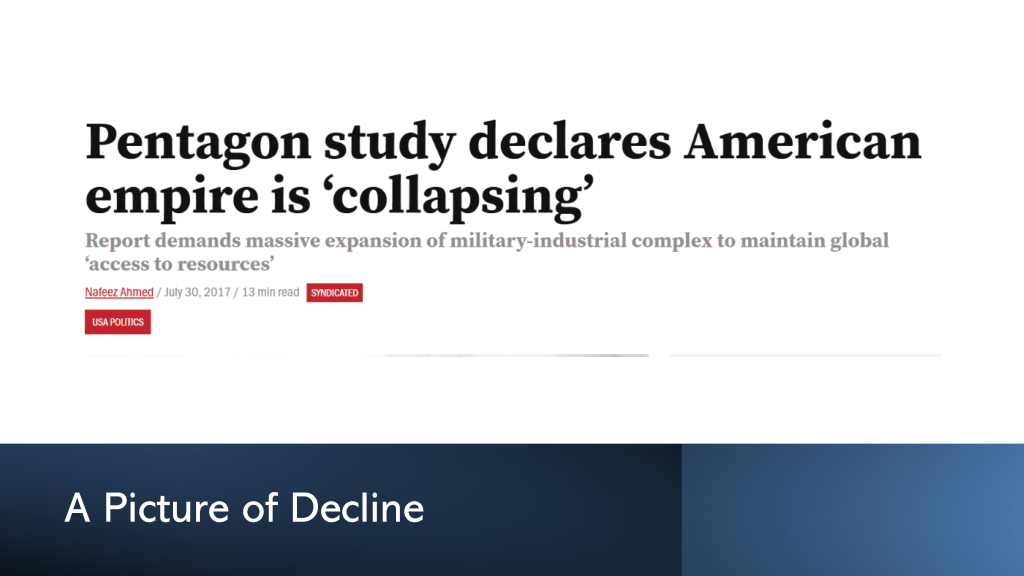
Ahmed, N. (2017, July 30). Pentagon study declares American empire is ‘collapsing’. Canadian Dimension. https://canadiandimension.com/articles/view/pentagon-study-declares-american-empire-is-collapsing

Bambrough, B. (2025, February 2). ‘This Needs To Stop Now’—Elon Musk Confirms Radical Doge U.S. Treasury Plan. Forbes. https://www.forbes.com/sites/digital-assets/2025/02/02/this-needs-to-stop-now-elon-musk-confirms-radical-doge-us-treasury-plan/?utm_source=pocket_shared

Beauchamp, Z. (2024, November 20). The messy contradictions of Trump’s second-term coalition | Vox. Vox.Com. https://www.vox.com/politics/386299/trump-administration-coalition-economic-foreign-policy

Cardinale, K. (2022, May 25). The making of a Tech Authoritarian. From Plato to Trumpism.https://www.lettsjournal.com/p/the-making-of-a-tech-authoritarian

Cosmo (Director). (2025, January 20). The Secret Life of Chaos | Beyond Order [Video recording]. https://www.youtube.com/watch?v=inofGyvshoQ

Dalhousie University (Director). (2024, November 20). The 2024 Stanfield Conversation: The US Election and Democracy’s Global Fate | Dalhousie University [Video recording]. https://www.youtube.com/watch?v=zMgA_oJ3mDE

Danner, C. (2025, February 3). Elon Musk May Have Your Social Security Number. Intelligencer. https://nymag.com/intelligencer/article/elon-musk-doge-treasury-access-federal-payments.html

Davis, C. (2024, October 6). Why aren’t we talking about the real reason male college enrollment is dropping? [Substack newsletter]. Matriarchal Blessing. https://celestemdavis.substack.com/p/why-boys-dont-go-to-college

Elliott, V. (2025, February 2). The Young, Inexperienced Engineers Aiding Elon Musk’s Government Takeover. Wired. https://www.wired.com/story/elon-musk-government-young-engineers/

Garcia, I. (2022, October 12). U.S. Senate: Blake Masters dislikes the country’s direction. Cronkite News. https://cronkitenews.azpbs.org/2022/10/12/us-senate-blake-masters-republican-arizona-venture-capitalist/

Jacobs, B. (2022, May 20). How Gen X Became the Trumpiest Generation. POLITICO. https://www.politico.com/news/magazine/2022/05/20/cherie-westrich-alt-rock-gen-x-maga-00033769

Levitsky, S., & Ziblatt, D. (2018). How Democracies Die. Crown Publishers.

McGreal, C. (2025, January 26). How the roots of the ‘PayPal mafia’ extend to apartheid South Africa. The Guardian. https://www.theguardian.com/technology/2025/jan/26/elon-musk-peter-thiel-apartheid-south-africa

McMaster, G. (2024, June 29). Four critical things to know about critical race theory. University of Alberta Folio. https://www.ualberta.ca/en/folio/2022/06/four-critical-things-to-know-about-critical-race-theory.html?utm_source=pocket_shared

Monbiot, G. (2024, January 6). What links Rishi Sunak, Javier Milei and Donald Trump? The shadowy network behind their policies. The Guardian. https://www.theguardian.com/commentisfree/2024/jan/06/rishi-sunak-javier-milei-donald-trump-atlas-network

Reich, R. (2025, January 26). The stunning real story behind Trump’s first week—Alternet.org. Alternet. https://www.alternet.org/trumps-first-week/

Sam Friedman, D. L. (2020). The Class Ceiling. Bristol University Press. https://policy.bristoluniversitypress.co.uk/trade/the-class-ceiling

Schuman, M. (2024, November 9). The American Global Order Could End. The Atlantic. https://www.theatlantic.com/international/archive/2024/11/us-world-power-over-election/680595/

Shapiro, A. (2022, October 3). Come along as we connect the dots between climate, migration and the far-right. NPR. https://www.npr.org/2022/10/03/1125746902/climate-change-migration-far-right-political-extremism

Slobodian, Q. (2023, April 4). The Wonderful Death of a State | Quinn Slobodian. The Baffler. https://thebaffler.com/latest/the-wonderful-death-of-a-state-slobodian

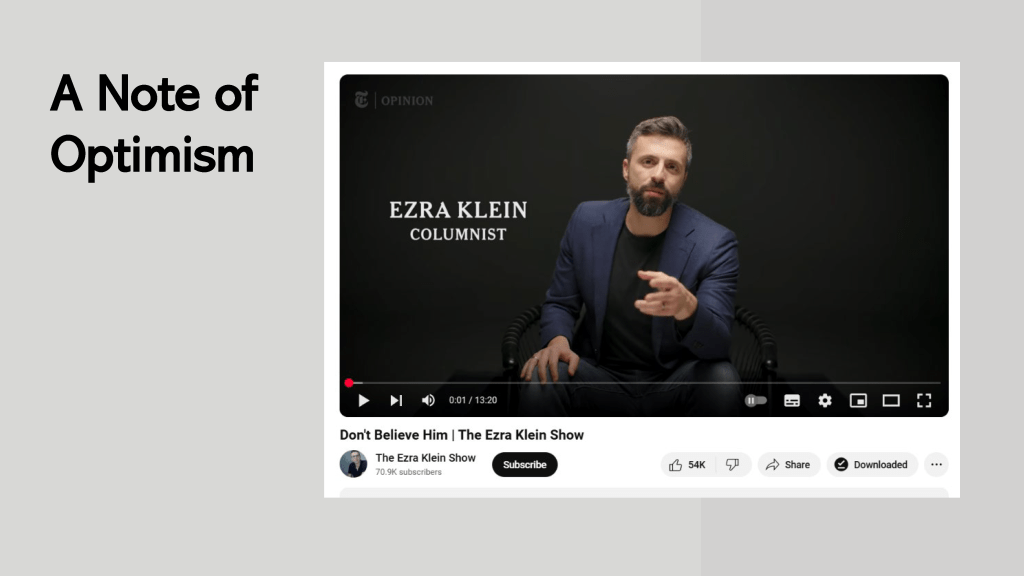
The Ezra Klein Show (Director). (2025, February 4). Don’t Believe Him | The Ezra Klein Show [Video recording]. https://www.youtube.com/watch?v=K8QLgLfqh6s

Tusikov, N. (2025). How Might Trump’s Big Tech Agenda Affect Canada? Centre for International Governance Innovation. https://www.cigionline.org/articles/how-might-trumps-big-tech-agenda-affect-canada/

Waller, J. G. (2022, February 20). Authoritarianism Here? American Affairs Journal. https://americanaffairsjournal.org/2022/02/authoritarianism-here/


Health, Peace, and the Summit of the Future: A Wake-Up Call

The Summit of the Future laid bare the stark reality of our global predicament. As young voices echoed through the halls, pleading for a better world, the disconnect between rhetoric and action was palpable. With a mere 16% of SDG targets on track for 2030, the clock is ticking, and the world is falling behind.

Leaders paraded their support for renewed efforts, yet their messages blurred into a cacophony of sameness. The elephant in the room remained unaddressed: If we can’t collaborate here, where can we? Who will step up to forge the future we desperately need?

This was nowhere more apparent than in the connections between Sustainable Development Goal 3 (Good Health and Well-being) and SDG 16 (Peace, Justice and Strong Institutions).  While there is a stronger recent focus on the link between health and economic or climate goals, the mutually reinforcing goals of health and peace are sometimes overlooked.  The ‘siloes’ of politics and strategy operate separately from those of health professions, public health experts, and socioeconomics.  Despite the overlaps, there is little discussion between the two communities.   

In 1981, the World Health Assembly acknowledged that the role of physicians and other health workers in the preservation and promotion of peace is “the most important factor for attainment of health for all.”  Similar initiatives include the World Health Organization’s Peace Through Health plan, begun in the 1990s; and the Health as a Bridge for Peace (HBP) framework, was formally accepted by the 51st World Health Assembly in 1998.

But the onus should not only be on the health sector: diplomats, security experts and foreign policy analysts should note the importance of the connection between health and peace. Similarly to the women, peace and security agenda, the health and peace agenda enables ‘multi-solving’ by addressing the root causes of violence and conflict.  Protecting health security  inoculates against violence in its many forms.  Attention to health security during post-conflict reconstruction reduces the potential for violence to feed into vicious cycles of retribution.

The pandemic exposed the critical need for global health diplomacy. Instead of uniting against a common threat, leaders retreated into nationalist health security postures, squandering chances for conflict resolution through health diplomacy.

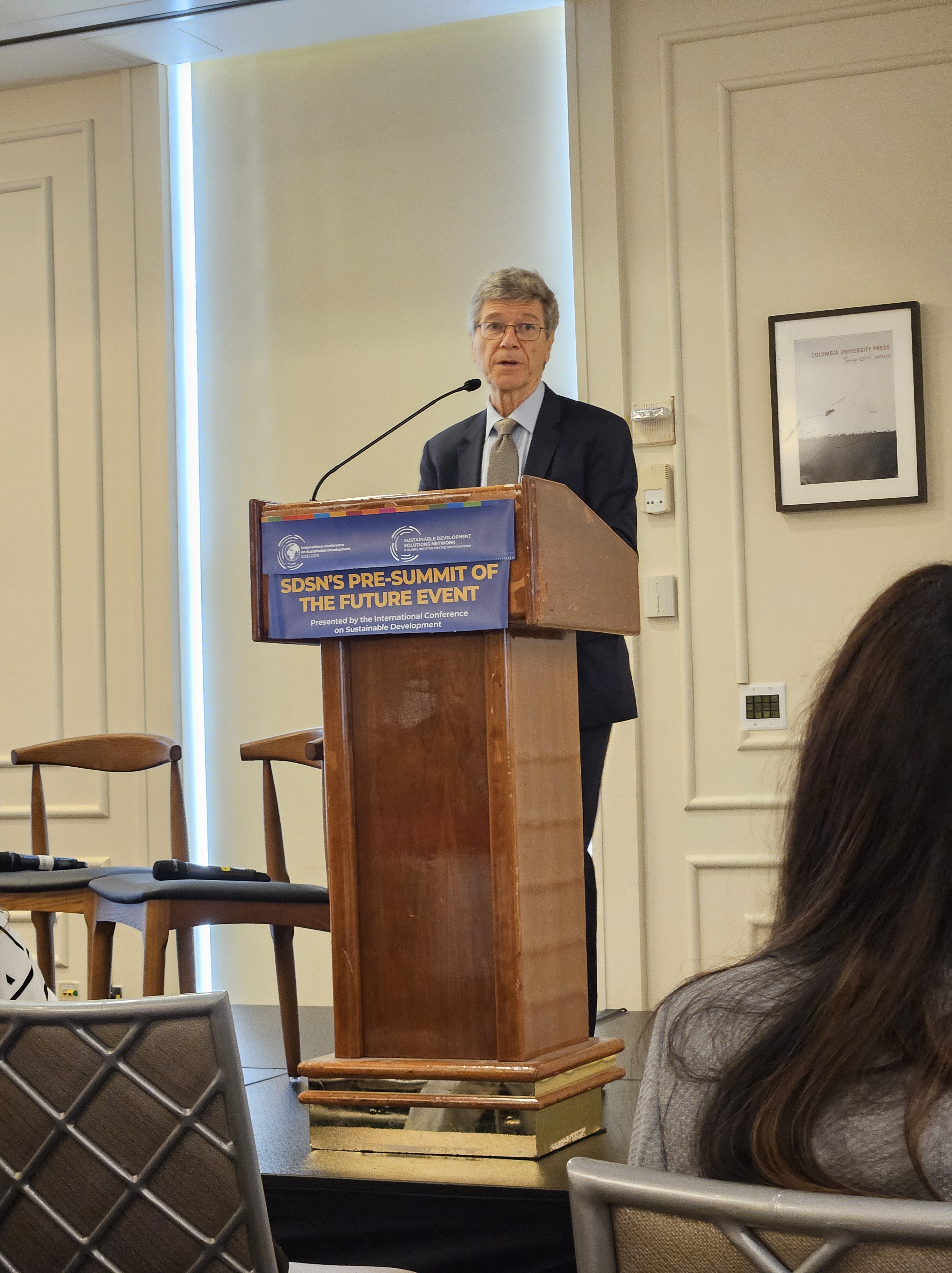
Dr. Jeffrey Sachs speaks at the Pre-Summit of the Future at Columbia University, September 2024

Dr. Jeffrey Sachs speaks at the Pre-Summit of the Future at Columbia University, September 2024

Amidst the gloom, glimmers of progress shine through:

On September 21st 2024, the International Day of Peace, as part of the UN General Assembly Action Days, I was struck by the comments of Juan Manuel Santos, Former President of Colombia and 2016 Nobel Peace Prize recipient. He noted the strong connection between health and peace when he observed the way in which the civil war conflict in Colombia changed over time.  As he said, “when soldiers were taken to hospital instead of being killed, it changed the dynamic: when one could trust that the other side would respect their humanity, the level of trust rose on all sides.  The ‘enemy’ became human.”

Similarly, in 1859 when Swiss businessman Henri Dunant heard the cries of the wounded on the plains following the Battle of Solferino and called for a halt in the fighting to organize aid, a shift took place that changed the world forever.  Dunant’s proposal to create national relief societies to provide neutral and impartial care during conflicts led to the formation of the International Committee of the Red Cross in 1863 and the adoption of the first Geneva Convention in 1864.  Ever since, heeding the needs for health has been a powerful lever for upsetting the vicious cycle of violence.  In September, fighting was paused in Gaza to enable the vaccination of 640,000 children from the scourge of polio. This effort was not an outlier:  the World Health Organization has assisted with vaccine drives during humanitarian crises in many other parts of the world, including the Congo in 1999, where the immunization-related days of tranquility enabled the vaccination of 80% of 10 million children younger than 5 years.

To break the cycle of violence and create a healthier, more peaceful world, we must:

1. Deploy dedicated health diplomats to navigate the geopolitical minefield

2. Revitalize human rights and the Geneva Conventions, prioritizing protection for healthcare workers in conflict zones

3. Boost Official Development Assistance (ODA) for health systems (currently a paltry 0.37% of OECD GNI)

4. Educate relentlessly on the health-peace connection

The Pact for the Future offers a chance to recognize that investing in health creates a powerful multiplier effect on peace. It’s time to move beyond lofty declarations and take decisive action. The future we promised to safeguard is now, and it’s slipping through our fingers.

Unrest to Uprising: The Past, Present and Future of Political Protest

This talk will delve into the historical context, current challenges, and future implications of this powerful form of civic action. What are the ethical dilemmas of civil disobedience? What might be the effect of disruptive technologies on state surveillance and the balance between security and individual freedoms? Talk on November 10, 2023

Further Reading

‘93% of Black Lives Matter Protests Have Been Peaceful: Report | Time’. n.d. Accessed 4 November 2023. https://time.com/5886348/report-peaceful-protests/

Applebaum, Anne, and Peter Pomerantsev. 2021. ‘How to Put Out Democracy’s Dumpster Fire’. The Atlantic, 9 March 2021. https://www.theatlantic.com/magazine/archive/2021/04/the-internet-doesnt-have-to-be-awful/618079/.

‘Climate Chaos, the French Revolution and a Warning for Today | Time’. n.d. Accessed 4 November 2023. https://time.com/6107671/french-revolution-history-climate/?utm_source=pocket_saves.

‘Doe Mee, Maak Nederland Fossielvrij!’ n.d. Fossielvrij NL. Accessed 4 November 2023. https://gofossilfree.org/nl/.

Gurri, Martin. 2018. The Revolt of the Public and the Crisis of Authority in the New Millennium. San Francisco, CA: Stripe Press.

Haidt, Jonathan. 2022. ‘Why the Past 10 Years of American Life Have Been Uniquely Stupid’. The Atlantic, 11 April 2022. https://www.theatlantic.com/magazine/archive/2022/05/social-media-democracy-trust-babel/629369/.

Hutt, James. 2022. ‘The Battle of Billings Bridge ⋆ The Breach’. The Breach. 16 February 2022. https://breachmedia.ca/the-battle-of-billings-bridge/.

‘Iran’s Summer of Discontent: A Warning for Washington’. 2018. War on the Rocks. 23 July 2018. https://warontherocks.com/2018/07/irans-summer-of-discontent-a-warning-for-washington/.

June 3, Asam Ahmad /, and 2018 / 8 Min Read. n.d. ‘Who Is Your Oppressor?’ Accessed 4 November 2023. https://canadiandimension.com/articles/view/who-is-your-oppressor.

Kumar, Rajeesh. 2017. ‘What New Declassifications Reveal about the 1953 Coup in Iran’. E-International Relations (blog). 7 September 2017. https://www.e-ir.info/2017/09/07/what-new-declassifications-reveal-about-the-1953-coup-in-iran/.

Levine, Bruce E. 2018. ‘Another Reason Young Americans Don’t Revolt Against Being Screwed’. CounterPunch.Org. 14 June 2018. https://www.counterpunch.org/2018/06/14/another-reason-young-americans-dont-revolt-against-being-screwed/.

Lowery, Wesley. 2020. ‘Why Minneapolis Was the Breaking Point’. The Atlantic (blog). 10 June 2020. https://www.theatlantic.com/politics/archive/2020/06/wesley-lowery-george-floyd-minneapolis-black-lives/612391/.

Monbiot, George. 2022. ‘“It Felt like History Itself” – 48 Protest Photographs That Changed the World’. The Guardian, 2 July 2022, sec. World news. https://www.theguardian.com/world/2022/jul/02/it-felt-like-history-itself-48-protest-photographs-that-changed-the-world.

Morgan, Ted. 2021. ‘The Capitol Assault Was an Act of Expressive Politics. A Backlash Is Surely Coming—against the Left’. Salon. 27 February 2021. https://www.salon.com/2021/02/27/the-capitol-assault-was-an-act-of-expressive-politics-a-backlash-is-surely-comingagainst-the-left/.

Ozden, James. 2023. ‘What Makes a Protest Movement Successful?’ Social Change Lab. 4 January 2023. https://www.socialchangelab.org/post/what-makes-a-protest-movement-successful.

Pineda, Erin R. 2021a. Seeing Like an Activist: Civil Disobedience and the Civil Rights Movement. Oxford, New York: Oxford University Press.

———. 2022. ‘“Disobedience”: An Essay by Erin R. Pineda (Keywords: Activism; Civil Disobedience; Climate Change)’. The Philosopher. 18 July 2022. https://www.thephilosopher1923.org/post/the-new-basics-disobedience.

Resilience. 2018. ‘Poor People’s Campaign Gears Up for Mother’s Day Launch’. Resilience. 9 May 2018. https://www.resilience.org/stories/2018-05-09/poor-peoples-campaign-gears-up-for-mothers-day-launch/.

Sleeper, Jim. 2017. ‘Warlocks, Witches and American Stampedes: The Built-in Dangers of #MeToo’. Salon. 28 December 2017. https://www.salon.com/2017/12/28/warlocks-witches-and-american-stampedes-the-built-in-dangers-of-metoo/.

The Economist. n.d. ‘Digital Media Fuel Global Protests but Can Be Used against Them’. Accessed 4 November 2023. https://www.economist.com/international/2021/01/16/digital-media-fuel-global-protests-but-can-be-used-against-them

‘What INGOs Can Learn from Greta Thunberg and the Global Climate Strikes’. n.d. openDemocracy. Accessed 4 November 2023. https://www.opendemocracy.net/en/transformation/what-ingos-can-learn-greta-thunberg-and-global-climate-strikes/

‘Why Confrontation Is Not the Best Way to Effect Regime Change in China – Areo’. n.d. Accessed 4 November 2023. https://areomagazine.com/2019/06/21/why-confrontation-is-not-the-best-way-to-effect-regime-change-in-china/

‘Women Are Marrying Trees to Save Them from Deforestation’. 2021. Euronews. 13 September 2021. https://www.euronews.com/green/2021/09/12/over-70-women-marry-local-trees-to-save-them-from-deforestation.

The New(er) World of Untruth Part II

Alternative facts, misdirection, and outright propaganda seem to dominate the news media landscape today in a way that is quite different from the past.

Presented February 10th, Society for Learning in Retirement

Thank you to the Society for Learning in Retirement in Kelowna for honouring me with a lifetime membership! I feel very privileged to be able to continue serving this very wonderful group of humans!

Some Tools for Media Literacy

Readings

2018 Edelman Trust Barometer. (2017).

Art of the lie—Post-truth politics. (2016). The Economist. https://www.economist.com/leaders/2016/09/10/art-of-the-lie?cid1=cust/ednew/n/bl/n/2016098n/owned/n/n/nwl/n/n/NA/n

Benkler, Y., Faris, R., Roberts, H., & Zuckerman, E. (2017). Study: Breitbart-led right-wing media ecosystem altered broader media agenda—Columbia Journalism Review. Columbia Journalism Review. http://www.cjr.org/analysis/breitbart-media-trump-harvard-study.php

ChatGPT: Optimizing Language Models for Dialogue. (2022, November 30). OpenAI. https://openai.com/blog/chatgpt/

Coaston, J. (2018). #QAnon, the pro-Trump conspiracy theory, explained—Vox. Vox. https://www.vox.com/policy-and-politics/2018/8/1/17253444/qanon-trump-conspiracy-theory-reddit

Coles, T. J. (2018). Fake News and Weaponized Bots: How Algorithms Inflate Profiles, Spread Disinfo and Disrupt Democracy. Counterpunch. https://www.counterpunch.org/2018/10/08/fake-news-and-weaponized-bots-how-algorithms-inflate-profiles-spread-disinfo-and-disrupt-democracy/

Devega, C. (2018). Donald Trump’s “chaos magic”: Author Gary Lachman on the far right’s links to occult philosophy | Salon.com. Salon. https://www.salon.com/2018/07/16/donald-trumps-chaos-magic-author-gary-lachman-on-the-far-rights-links-to-occult-philosophy/

Edwards, S., & Livingston, S. (2018). Fake news is about to get a lot worse. That will make it easier to violate human rights—And get away with it. The Washington Post. https://www.washingtonpost.com/amphtml/news/monkey-cage/wp/2018/04/03/fake-news-is-about-to-get-a-lot-worse-that-will-make-it-easier-to-violate-human-rights-and-get-away-with-it/?noredirect=on

Gonzalez, R. J. (2018). The Mind-Benders: How to Harvest Facebook Data, Brainwash Voters, and Swing Elections. Counterpunch. https://www.counterpunch.org/2018/03/23/the-mind-benders-how-to-harvest-facebook-data-brainwash-voters-and-swing-elections/

Gross, J. (2023, January 10). How Finland Is Teaching a Generation to Spot Misinformation. The New York Times. https://www.nytimes.com/2023/01/10/world/europe/finland-misinformation-classes.html

Gutting, G. (2011). The Social Side of Reasoning—The New York Times. The New York Times Opinionator – The Stone. https://opinionator.blogs.nytimes.com/2011/06/29/argument-truth-and-the-social-side-of-reasoning/

How to Spot a Bogus News Site. (n.d.). Pocket. Retrieved January 30, 2023, from https://getpocket.com/collections/how-to-spot-a-bogus-news-site

Illing, S. (2018). Hashtag wars: How Facebook, Twitter, and social media changed how we fight wars—Vox. Vox. https://www.vox.com/platform/amp/world/2018/10/8/17884154/social-media-cyberwar-isis-taylor-swift-peter-singer

Jenkins, H. (2009). How "Dumbledore’s Army" Is Transforming Our World: An Interview with the HP Alliance’s Andrew Slack (Part One)—Henry Jenkins. Henry Jenkins.Org. http://henryjenkins.org/blog/2009/07/how_dumbledores_army_is_transf.html

Morgan, J. (2017). Sockpuppets, Secessionists, and Breitbart – Data for Democracy – Medium. Data for Democracy. https://medium.com/data-for-democracy/sockpuppets-secessionists-and-breitbart-7171b1134cd5

Mosleh, M., Pennycook, G., Arechar, A. A., & Rand, D. G. (2021). Cognitive reflection correlates with behavior on Twitter. Nature Communications, 12(1), Article 1. https://doi.org/10.1038/s41467-020-20043-0

Pennycook, G., Epstein, Z., Mosleh, M., Arechar, A. A., Eckles, D., & Rand, D. G. (2021). Shifting attention to accuracy can reduce misinformation online. Nature, 592(7855), Article 7855. https://doi.org/10.1038/s41586-021-03344-2

Pennycook, G., & Rand, D. G. (2022). Accuracy prompts are a replicable and generalizable approach for reducing the spread of misinformation. Nature Communications, 13(1), Article 1. https://doi.org/10.1038/s41467-022-30073-5

Shao, C., Ciampaglia, G. L., Varol, O., Yang, K., Flammini, A., & Menczer, F. (2017). The spread of low-credibility content by social bots. http://arxiv.org/abs/1707.07592

Weisburd, A., Watts, C., & Berger, J. (2016). Trolling for Trump: How Russia Is Trying to Destroy Our Democracy. War on the Rocks. https://warontherocks.com/2016/11/trolling-for-trump-how-russia-is-trying-to-destroy-our-democracy/

Yglesias, M. (2017). The Bullshitter-in-Chief—Vox. Vox. https://www.vox.com/policy-and-politics/2017/5/30/15631710/trump-bullshit

Attack on Democracy

Around the world, the institutions of liberal democratic systems are
waging a rear-guard action against sustained attacks from populist
and extremist movements. These trends are not new, but can be
traced to events in the recent past, as well as broader historical
developments. In this session, participants will learn why political
scientists are so concerned about these trends, and what ordinary
citizens can do to improve democratic accountability in Canada.

Attack on Democracy

The Politics of Oil

Talk scheduled for October 18th. Oil is essential to industrial society as we know it.  The history of the industrialized world has been shaped by changes in the environmental, economic, social, and political dimensions of oil.  In this session, we will learn about the history, the present challenges, and the future of oil in an environmentally-stressed planet. Participants will emerge with a deeper appreciation for the complexities of oil politics.

Works

Lee, J (September 7, 2019) “The World’s Oil Glut is Much Worse than it Looks” Bloomberg Opinion

Bloomberg. Woolley, (2013) “Selling Carbon Taxes in the Exurbs” Francis Worthwhile Canadian Initiatives

Trump and the US(S) Titanic (Talk)

Enjoy my talk on March 11th at Okanagan College in Penticton!  Since the mid-20th century observers have been debating the rise, peak and decline of the United States as the world’s leading superpower. In this session, we will go beyond Trumpism to look at the deeper underlying economic, political and social factors that have led up to the current era of US leadership (or lack of), and ask what might be the impact of these changes on the rest of the world, especially Canada. Is the US in decline? What might that ‘look like’ in the years to come? How bad (or good) can it get?

References

Beckley, M. (2017). The Emerging Military Balance in East Asia: How China’s Neighbors Can Check Chinese Naval Expansion. International Security, 42(2), 78–119. https://doi.org/10.1162/ISEC_a_00294
Beckley, M. (2012). China’s Century? Why America’s Edge Will Endure. International Security, 36(3), 41–78. https://doi.org/10.1162/ISEC_a_00066
Borger, J. (2014). Risk of nuclear accidents is rising, says report on near-misses | World news | The Guardian. Retrieved March 8, 2019, from https://www.theguardian.com/world/2014/apr/29/nuclear-accident-near-misses-report
Devlin, K. (2018). Foreign affairs experts, U.S. public agree: America is less respected globally | Pew Research Center. Retrieved March 8, 2019, from http://www.pewresearch.org/fact-tank/2018/12/17/international-relations-experts-and-u-s-public-agree-america-is-less-respected-globally/?amp=1&__twitter_impression=true
ERlanger, S., & Bennhold, K. (2019). Rift Between Trump and Europe Is Now Open and Angry – The New York Times. Retrieved March 8, 2019, from https://www.nytimes.com/2019/02/17/world/europe/trump-international-relations-munich.html
Faturechi, R., Rose, M., & Miller, T. C. (2019). Years of Warnings, Then Death and Disaster: How the Navy Failed Its Sailors. ProPublica.
Friedberg, A. L. (2018). Competing with China. Survival, 60(3), 7–64. https://doi.org/10.1080/00396338.2018.1470755
Gold, H. (2019). The U.S. Is Getting Closer to a Recession, Data Show – Barron’s. Retrieved March 8, 2019, from https://www.barrons.com/amp/articles/the-u-s-is-in-the-late-stages-of-expansion-data-show-51549642305
Jacques, M. (2012). When China Rules the World. Penguin.
Klein, E. (2011). Ezra Klein – The U.S. Government: An insurance conglomerate protected by a large, standing army. Retrieved March 8, 2019, from http://voices.washingtonpost.com/ezra-klein/2011/02/the_us_government_an_insurance.html
Long, H. (2019). A record 7 million Americans are 3 months behind on their car payments, a red flag for the economy – The Washington Post. Retrieved March 8, 2019, from https://www.washingtonpost.com/business/2019/02/12/record-million-americans-are-months-behind-their-car-payments-red-flag-economy/?utm_source=reddit.com&utm_term=.1fc9b4020266
Mahbubani Kishore. (2009). The New Asian Hemisphere.
Nougayrede, N. (2019). Why Trump and his team want to wipe out the EU | Natalie Nougayrède | Opinion | The Guardian. Retrieved March 8, 2019, from https://www.theguardian.com/commentisfree/2019/feb/18/trump-pompeo-bolton-eu-eastern-european-states
Quackenbush, C. (2019). U.S. Slips Out of Top 20 in Global Corruption Index | Time. Retrieved March 8, 2019, from http://time.com/5515195/united-states-slips-corruption-index/
Reuters. (2019). $1.5 trillion U.S. tax cut has no major impact on business capex plans: survey | Reuters. Retrieved March 8, 2019, from https://www.reuters.com/article/us-usa-economy-investment-idUSKCN1PM0B0
Sammon, A. (2019). Elwood, Illinois (Pop. 2,200), Has Become a Vital Hub of America’s Consumer Economy. And It’s Hell. | The New Republic. Retrieved March 8, 2019, from https://newrepublic.com/article/152836/elwood-illinois-pop-2200-become-vital-hub-americas-consumer-economy-its-hell
Schweber, N., & Miller, T. C. (2019). In Navy Disasters, Neglect, Mistakes, and 17 Lost Sailors. ProPublica.
Shifrinson, J. (2018). The rise of China, balance of power theory and US national security: Reasons for optimism? Journal of Strategic Studies, 1–42. https://doi.org/10.1080/01402390.2018.1558056
Tanzi, A. (2019). U.S. Student Debt in `Serious Delinquency’ Tops $166 Billion – Bloomberg. Retrieved March 8, 2019, from https://www.bloomberg.com/news/articles/2019-02-16/u-s-student-debt-in-serious-delinquency-tops-166-billion
Wright, T. J. (n.d.). All measures short of war : the contest for the twenty-first century and the future of American power.
Zakaria, F. (2009). The post-American world.

The Need for Compassionate Law

As 2018 comes to an end and the world looks to an increasingly uncertain future, it is worthwhile to reflect on the importance of compassion in public life.  On the one hand, it seems it should not be necessary to remind ourselves of the need for compassion, while on the other hand, there has never been a time when it is more vital to think about it.

When I speak of compassion I consider it to be similar to the emotion of empathy, which means the ability to identify closely with the feelings of another.  However, empathy is an emotion, while compassion is emotion plus action.  Empathy is personal, individual, and private.  When one experiences empathy, it is not necessarily expressed.  Many of us feel empathy for the plight of refugees, but few of us take any action based on those feelings.  Compassion is both an expression and an action, something that is a unique responsibility of the powerful.  It is the world’s 1% who, due to their elite position, have the most ability to exercise compassion.  Consequently, the world’s 1% (and if you live in a relatively wealthy developed country, you are part of this elite) uniquely bear the moral responsibility to exercise compassion.  The exercise and practice of compassion as an action is much rarer than the feeling of empathy, partly because wealth and inequality suppress the expression of compassion.  As the world becomes wealthier and more unequal, generosity declines.

Even more unusual is the embedding of compassion into the practices of a society, in other words, through its laws and institutions.  Are institutions capable of compassion?  Indeed they must be, because if social structures can be violent and oppressive, then it stands to reason that the opposite must also be possible:  institutions and laws can be written in compassionate ways, with compassionate ends.  It is the public exercise of compassion with which I am most concerned with, because it raises the potential for people to write compassionate institutions and laws.  Compassionate laws are necessary because, as suggested, individual empathy can fail – it is temporary, personal, individual and private.

Compassionate laws make it possible for persons to express and act on their feelings of empathy, because they can see that those feelings are socially elevated.  The Dali Lama talks about something similar in the Education of the Heart. Compassionate law can help to educate and give permission for people to act on their empathy.  To say that law can be compassionate goes beyond a ‘minimalist’ vision of law – that law is only there to level the playing field and justice means equal treatment under the law.   Even if law were able to do this leveling, an element of compassion is also essential to the achievement of equal treatment, since law must be attentive to justice.  In this sense, human rights law is essentially compassionate in its purpose. Based on observation of the current state of law in the US, it is clearly not able to even achieve the minimal goal of equal treatment or fairness.  The gap between law and justice can be reduced with adequate attention to the need for compassionate law.

The kind of compassion I’m thinking about should also be distinguished from altruism, although compassion relies on altruism, they are not identical.  Altruism, which is a kind of selflessness, or non-self interested attitude of generosity and giving, is a vital component of compassion, because altruistic motives reduce the temptation to use demonstrations of compassion for self-promotion.  Compassionate law is one very effective way to express altruism.  Indeed, compassionate law resists self-interested motives by moving altruism from the private to the public sphere and thereby removing the personal motives that might affect compassionate and just outcomes.

The enactment of compassionate law recognizes the innate inequality of human relationships, and works to proactively overcome those inequalities.

Recently, some thinking on giving and charity has been diverted from these concepts of compassion by a concern with effectiveness.  Rather than asking how can giving be more compassionate, the question becomes: how can giving be most effective?   As one proponent argues: “Instead of doing charity in a way that makes people feel good, effective altruists rely on rigorous, evidence-based analysis to decide how to donate money, where to donate, and which careers are most ethical.” I would argue that this is a diversion.  Effective altruists argue using a utilitarian measure:  what is good for the most number of people must be the best and most effective form of giving.  Using this algorithm, how might one decide between funding one individual’s education and funding a food program for thousands?  Probably many more people can be helped with the food program, but over the course of a lifetime what effect might a highly educated individual have, especially if they were able to achieve a position in which they could institute more compassionate laws?  The effort to reduce giving to an algorithm sacrifices the element of compassion and arguably undermines the goal of achieving more effective giving.  It’s not that effective altruism is wrong, it just kind of misses the point.  What is really changed, even if a larger number of people are helped by a given action?  There is a risk in reinforcing the status quo and ensuring that giving will continue to be necessary far into the future, violating the goal of achieving truly altruistic giving.

Compassionate laws are necessary because individual empathy can fail – it is temporary, personal, individual and private.

The enactment of compassionate law can, over time and with much learning, come closer to achieving lasting and effective results because it builds-in the principle of altruism by removing self-promotion from the equation.  In addition, compassionate law recognizes the innate inequality of human relationships, and works to proactively overcome those inequalities.  The human tendency to self-aggrandizement and acquisitiveness is worsened by inequality.  Inequality erodes people’s ability to be altruistic and even their ability to empathize.  Compassion is needed in a highly unequal world because it is effective, and it is effective because it is authoritative and self-reflexive.  The exercise of compassion invites reflection upon one’s own position and relatively good fortune.  The proponents of effective altruism are right that relying on natural generosity and emotion is insufficient to make for effective giving, but they are wrong to abandon the idea of compassion, which is needed now more than at any other time of history.  This season of giving, consider ways that you might contribute to the establishment of compassionate law, or if this is too ambitious, think about how you can help others express and act on their feelings of empathy, working together with others.  For starters, you might consider sharing this post!


The Deep State or the Degraded State?

IMG_20161108_195542

Both the Left and the right have adopted the terminology of the Deep State to describe those hidden structures and relationships that permeate a state’s administrative apparatus and represent a set of semi-permanent structures that sit below the political level.  On both sides, the so-called Deep State has come to represent a fundamentally anti-democratic and secretive force operating out of public view and without accountability or transparency.   The argument from the left is that the revolving doors of Wall Street, the military and the bureaucracy have created a club of common interests that works towards favourable policies for the wealthy, including low taxes, de-regulation, militarism and regressive social and economic policies that penalize the poor. For the right, the deep state has become a force for endless bloat, overspending, over-regulation and failed global liberal projects of democratization and cosmopolitanism. In particular, the right has focused on the Obama administration’s expansion of healthcare services as a wedge to entrench even more state bureaucracies.

The polarized state of politics in the US means that there is a tendency on both sides to overstate the power, significance and uniformity of the Deep State.   In political science the term ‘deep state’ as it is presently used  does not have technical or analytical meaning.  However, political scientists sometimes made a distinction between 1. the state administrative apparatus; 2. the government, which changes frequently in response to democratic cycles; and 3. the semi-political institutions that are termed a ‘regime’, which melds the political and bureaucratic elements.  These three elements (the bureaucracy, the government, and the regime) form a larger, and much more permanent organization termed ‘the state’ which encompasses and supersedes all of these components by embodying a single legal entity from which the authority of all of the other parts flows.   The separation of institutional powers among the branches of government, and among the various bureaucracies, is permanently enshrined in the Constitution in order to prevent the abuse of power by any one of these components, all underpinned by the permanence of the rule of law.

The polarized state of politics in the US means that there is a tendency on both sides to overstate the power, significance and uniformity of the deep state.

The fact is, the directly ‘democratic’ components of the state are relatively shallow, since the temporary election of a government on top of a large permanent experienced bureaucratic apparatus cannot, of necessity, institute revolutionary changes in the short term which it is allotted.  This transience of the government is by design. Changes are always contingent on the maintenance of popular support., because any program of policies and institutions must be vetted by the people periodically. The permanence of the administration and the transience of government are complementary forces which maintain stability by the periodic checks and balances provided by democratic elections, which provide sufficient flexibility for the state to maintain relevance and responsiveness to the needs and wishes of the people. This is one key way in which a democratic state is distinguished from an authoritarian one, since in an authoritarian state like Pakistan or Turkey (as it is becoming) the Deep State acts wholly independently IMG_20161116_210123of the electoral process and has much greater power as a result.

Clearly, something has gone wrong with this careful balance.  As Eisenhower knew well, the ‘military-industrial complex’ was not made of and by the state, nor did it arise from state action, but was the main threat to the state.  When Eisenhower warned at the conclusion of his term about the creeping power of the ‘military-industrial complex’, he was referring to the entrenchment of relationships among the component parts that had become a semi-permanent structure of interests antithetical to democracy. Similarly, Mike Lofgren refers to the Deep State not as “a secret, conspiratorial cabal” but rather as “hiding mostly in plain sight, and its operators mainly act in the light of day.” As he says “it is not a tight-knit group, and has no clear objective. Rather, it is a sprawling network, stretching across the government and into the private sector.”  This complex is composed of a loose network of relationships among ruling elites from the commercial, financial, military, scientific and governmental sectors.  In other words, it is both public and private in origin and nature.

So, what is going on? First of all, the transfer of power from one government to the next has fundamentally broken down, not only because of excessive partisanship, but also due to social divisions of interest within the ruling elites, whose ability to maintain a common interest has been compromised.

Second, this set of alliances threatens the state writ large, because it can potentially affect the more permanent institutions without reference to the vetting of the periodic democratic checks of elections.  The problem with these relationships is not that they are secret (they aren’t) nor that they are hostile to social, political and economic progress (because they have been and can be progressive) but because they have failed in their most important function: to create and maintain legitimacy.  Until recently, this admittedly problematic arrangement could be relied upon to organize and underpin (or at least, not obstruct) peaceful and orderly transitions of government that, if not democratic, at least could be said to command the legitimate support of sufficient numbers of the public to maintain the authority of the state itself.

Finally (and you can probably see where I’m going here) the system has been broken by an inability of the ruling elites to agree on the fundamental direction of the state.  The state itself is not broken, nor is the Constitution, nor (yet) is the democratic mechanism for transferring power between regimes.

What could once be a strategy for election, must now be a strategy of grasping for the broken pieces of the state that have been set adrift and unclaimed.

What is broken is the legitimacy of the state, its ability to rally support and meet demands, the most basic functions of statehood.  The problem is not that the Deep State is a monolithic and autonomous shadowy force acting against the democratic will, the biggest problem is that the state is being broken apart into its component parts due to the inability of the ruling elite to maintain legitimacy and enable a peaceful transition of power.

What could once be done in public must now increasingly be done behind closed doors. What could once be said openly must now be cloaked in distraction and lies. What could once be a strategy for election, must now be a strategy of grasping for the broken pieces of the state that have been set adrift and unclaimed.  The real threat is to the state, in its larger, wider meaning as a social, political and legal community of common interests and values.


What Kind of (In)Equality Do We Want?

Photo Credit: Jessica Tam Flickr

When analyzing any phenomena, it helps to have a good idea what we want to achieve. In political science as in life, equality has great significance. Analysts tend to think quite differently from the general public, however, about what constitutes equality and how we should use the term. Let’s consider a thought experiment to sort out the difference between ‘equality of opportunity’ and ‘equality of condition’.

If we imagine that equality of opportunity and equality of condition are kinds of ideal types at opposite poles, with a spectrum of variations in between, then the picture might look something like this: under ‘equality of condition’ everyone would experience the same life outcomes: equal incomes, equal standards of living, and equal levels of education, health care, and work. How would things differ? Likely inequality would creep in through limited means: for example, some may work longer hours, have more or less education, spend more or less time skiing, etc.

What is wrong with this picture? The most common criticisms of this ‘absolute equality’ are:

It reduces the incentive to succeed, and 2. It distorts the value of things, leading to scarcities and gluts in supply.

Society involves differential treatment.

But these are practical criticisms, not questions of justice.   Would absolute equality actually be ‘just’?  Assuming for the moment that such a system could be workable (and I’m not saying it is) then an argument could be made that it actually creates injustice by failing to differentiate among people with ascribed or inherent differences who deserve differential outcomes.  Those who work harder or are more creative or who are disabled or ill should be treated differently.  Some may deserve preferential access to resources either as a result of their extra effort, their accomplishment or contributions, or by virtue of need.  Tellingly, the right more often argues for differential outcomes based on effort and accomplishment, while ‘need’ tends to take second place. It is sometimes said that such a system would be communistic.  However, under Marx’s vision of communism, the ideal form of equality actually allowed for differential rewards focusing on need rather than accomplishment or contribution. Contrary to popular belief, Marx did not advocate absolute equality of condition. Indeed, nobody has, in all seriousness, ever really proposed that large-scale industrial societies impose absolute equality of condition.  This is because serious thinkers would quickly realize that equality of condition, even in its ideal form, would inevitably raise both practical and fairness questions since there would still need to be some argument for different treatment of some people.  Nobody is average.

Now, what about equality of opportunity? That sounds like something we can all get behind: everybody can try or fail equally well, and those with the greatest accomplishments and talents will rise to the top. This is kind of what Paul Summerville argues when he says:

Equality of opportunity is a virtue when it is twinned with unequal outcomes. It is meaningless without it. What is the point of equality opportunity if success is discouraged by custom, law, or taxation?

But, to respond to this, how can we be sure that everyone actually has an equal opportunity to try, and to win? Inequality all by itself is not evidence of equality of opportunity. What if the winners try to ‘kick the ladder out’ from behind them, blocking the upward advance of others? What if they use their newfound positions to favour their heirs and families and friends rather than allow their loved ones to fail? Perhaps when we see that some are able to climb up to the top from the very bottom of the social ladder without artificial assistance from the state, then we can say that equality of opportunity exists. But how many of these examples are sufficient to prove it? One? One in ten? One in a thousand? The fact is there is no natural or inevitable level of inequality that can tell us when everyone truly has an equal chance. We can point to clues: perhaps when the top 1% is as diverse and representative of the entire society, or when every member of the top group can claim to have climbed out of the gutter, but that seems as unlikely as the ideally equal society discussed above. The question of fairness rises again: even in a society in which opportunities are purely equally distributed, there will be unfairness due to the same factors mentioned above: What about those disadvantaged by illness or age or poor upbringing? What about highly talented or accomplished individuals who don’t manage to make it through no fault of their own? why value some talents more than others?

Given differences, how can we be sure that equality of opportunity exists?

Again, the argument to treat some people differently in order for equality of opportunity to be realized is present. But, the same question arises: what should be the basis for differential treatment? Here, the differences between the two poles start to disappear: the essential argument is not about equality at all, but about the basis and rationale for differences. Both sides work toward an ideal world that is impractical and unfair, yet both sides argue for ‘differential’ treatment on the basis of different individual characteristics. The right argues that differential treatment should be based on talents or contributions, while the left focuses on compensating for special needs and other (class) disadvantages.

The world we actually live in is of course far more complicated. Equality before the law, which is the dominant discourse of equality in Canada and other Western liberal democracies, is actually a fall-back position avoiding both of the options described above. It doesn’t guarantee equality of opportunity and it doesn’t mitigate inequalities of condition. At most, it provides a measure of our progress toward some compromise on fairness and practicality. It’s not irrelevant, far from it! The legal guarantees of the Voting Rights Act or protections for gay marriage or for equality between religious beliefs do matter, but not for the reasons we think. They matter less because they create equal opportunities, and more because they clarify the legitimate grounds for treating people differently. The fact that people are all, in some way, treated differently by society still needs to be acknowledged by all participants in the equality debate.

The next two blog posts will address the sources of present-day inequality in globalization, and the basis for differential treatment and its centrality to equality.