
In 1974, Immanuel Wallerstein argued that the world was composed of three types of economies: a core, a semi-periphery, and a periphery. In the core countries, capital-intensive manufactured products with high levels of complexity and value-added were the primary source of national wealth. In the periphery, labour-intensive primary resource industries were the main source of wealth. The semi-periphery countries mediated between the tw o, but all countries acted in accordance with the principles of the global capitalist system. What characterized the relationship between the three regions was the terms of trade among them: core countries accumulated wealth by extracting resources and labour from the periphery. In the outskirts, raw materials were traded for machinery and technology. The semi-periphery managed the relationship between the other two, with a mixed economy based on trade.
Even though Wallerstein’s analysis was applied primarily to Western and Eastern Europe, no one had any illusions at that time about who constituted the core, and who the periphery. At the commanding height of the world economy, the US was unrivalled as a trading powerhouse, the most efficient and competitive economy in the world, the driver and reference point for development for all countries (including the Soviet Union, the ostensible rival). Americans were the world’s consumers, traders, thinkers, workers, and investors. America defined the ‘core’ of the world economy.

Today, Asia is the world’s factory and an exporting powerhouse, sucking in raw materials from abroad at a ferocious rate. China is becoming the world’s braintrust, transforming trade goods into high-end tradable commodities and changing their workforce using technical and business knowledge to ‘reverse innovate’ new products and services. Today, Hollywood movies are released in China and India a full month before anyone in the US can see them. Australia, Canada, the Middle East, and South Africa, formerly the nimble trading members of the semi-periphery, are now repositioning themselves as raw materials and commoditiesproducers, supplying the forests, minerals, food, and fuel for the new core countries.
In this post-modern world-system, unrecognizable as it is from that of 50 years ago, the core and periphery have switched places. It is not so much ‘flat’ (as claimed by Thomas Friedman) as ‘bumpy’; with hills and valleys defined by the underlying forces of finance and production. Sometimes the ‘bumps’ create stranged bedfellows, as Greece and Germany are discovering. It is highly intermingled, more like a ‘neo-Medieval’ system of interlocking interdependencies coupled with rigid underlying hierarchies.
But as Wallerstein recognized, exactly which country plays which role is irrelevant. All of the things that are often deemed to make civilizations unique, like values, culture, soft power, technology, and even military prowess, are less important than the underlying patterns of wealth and exchange that dictate the range of motion that a country has. Assuming, as America and Canada have recently, that one is immune to the disciplining forces of capitalism, and that capitalism will only ever work in your own interests and against those of your competitors and partners; is a myopic failure of vision. It assumes that only one vantage point exists or even matters, and neglects the realities of the new post-modern topsy turvy world.
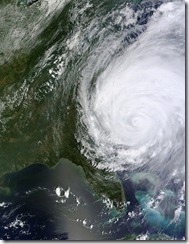 2011 is proving to be one of the most expensive years for disasters ever, with the frequency of disasters reaching an unprecedented level. Extreme drought, heat, flooding, hurricanes, and tornadoes have cost the US an estimated $35 billion, according to the

 What I want to argue is that both unemployment and environmental degradation are functions of the same problem: the way in which capitalist economies produce wealth. Unless the fundamentals are addressed, meaning changes in the way that work and nature are imagined and valued, then governments will be able to do little to solve either problem.
 So, the problems of unemployment and the problems of environmental degradation are related. However, increasing economic growth with little attention to the devaluation of nature will not solve unemployment in the long term, since it activates the very forces that devalue both work and nature. Unemployed workers, like ecosystems, represent overutilized and undervalued factors of production. As long as growth is calculated in a way that devalues work and nature, then governments will continually play catch-up to try and make up the difference. Ultimately, as we are seeing, government’s efforts to bridge the gap, in the form of payroll tax cuts and spending for stimulus, become devalued themselves. Subsidizing the costs of these inputs in the production process makes them less, not more, valuable for industry. Valuing nature for the ecosystem services it provides, and valuing work for the usefulness of the goods it produces, ultimately improves efficiency and reduces the waste, both human and natural, that capitalism creates.


 For a great listing of Student Opportunities in the field of International Development, check out the


You must be logged in to post a comment.