While political scientists know alot, the 2024 election shows that we clearly don’t know everything! The same can be said for our political leaders. In this session we will think about what we have learned and what we still need to learn about elections and forming governments in a democracy after November 2024. Talk February 7 2025
Dalhousie University (Director). (2024, November 20). The 2024 Stanfield Conversation: The US Election and Democracy’s Global Fate | Dalhousie University [Video recording]. https://www.youtube.com/watch?v=zMgA_oJ3mDE
The Summit of the Future laid bare the stark reality of our global predicament. As young voices echoed through the halls, pleading for a better world, the disconnect between rhetoric and action was palpable. With a mere 16% of SDG targets on track for 2030, the clock is ticking, and the world is falling behind.
Leaders paraded their support for renewed efforts, yet their messages blurred into a cacophony of sameness. The elephant in the room remained unaddressed: If we can’t collaborate here, where can we? Who will step up to forge the future we desperately need?
This was nowhere more apparent than in the connections between Sustainable Development Goal 3 (Good Health and Well-being) and SDG 16 (Peace, Justice and Strong Institutions). While there is a stronger recent focus on the link between health and economic or climate goals, the mutually reinforcing goals of health and peace are sometimes overlooked. The ‘siloes’ of politics and strategy operate separately from those of health professions, public health experts, and socioeconomics. Despite the overlaps, there is little discussion between the two communities.
In 1981, the World Health Assembly acknowledged that the role of physicians and other health workers in the preservation and promotion of peace is “the most important factor for attainment of health for all.” Similar initiatives include the World Health Organization’s Peace Through Health plan, begun in the 1990s; and the Health as a Bridge for Peace (HBP) framework, was formally accepted by the 51st World Health Assembly in 1998.
But the onus should not only be on the health sector: diplomats, security experts and foreign policy analysts should note the importance of the connection between health and peace. Similarly to the women, peace and security agenda, the health and peace agenda enables ‘multi-solving’ by addressing the root causes of violence and conflict. Protecting health security inoculates against violence in its many forms. Attention to health security during post-conflict reconstruction reduces the potential for violence to feed into vicious cycles of retribution.
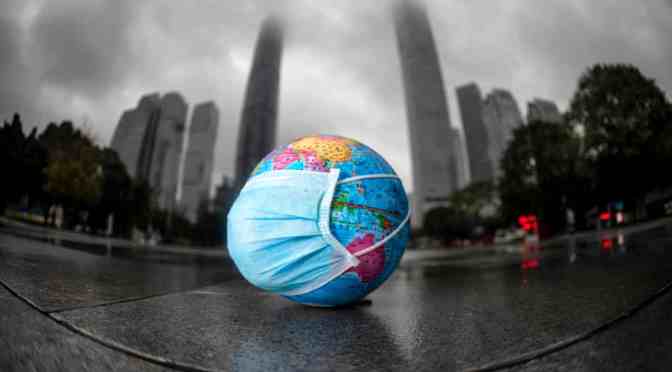
The pandemic exposed the critical need for global health diplomacy. Instead of uniting against a common threat, leaders retreated into nationalist health security postures, squandering chances for conflict resolution through health diplomacy.
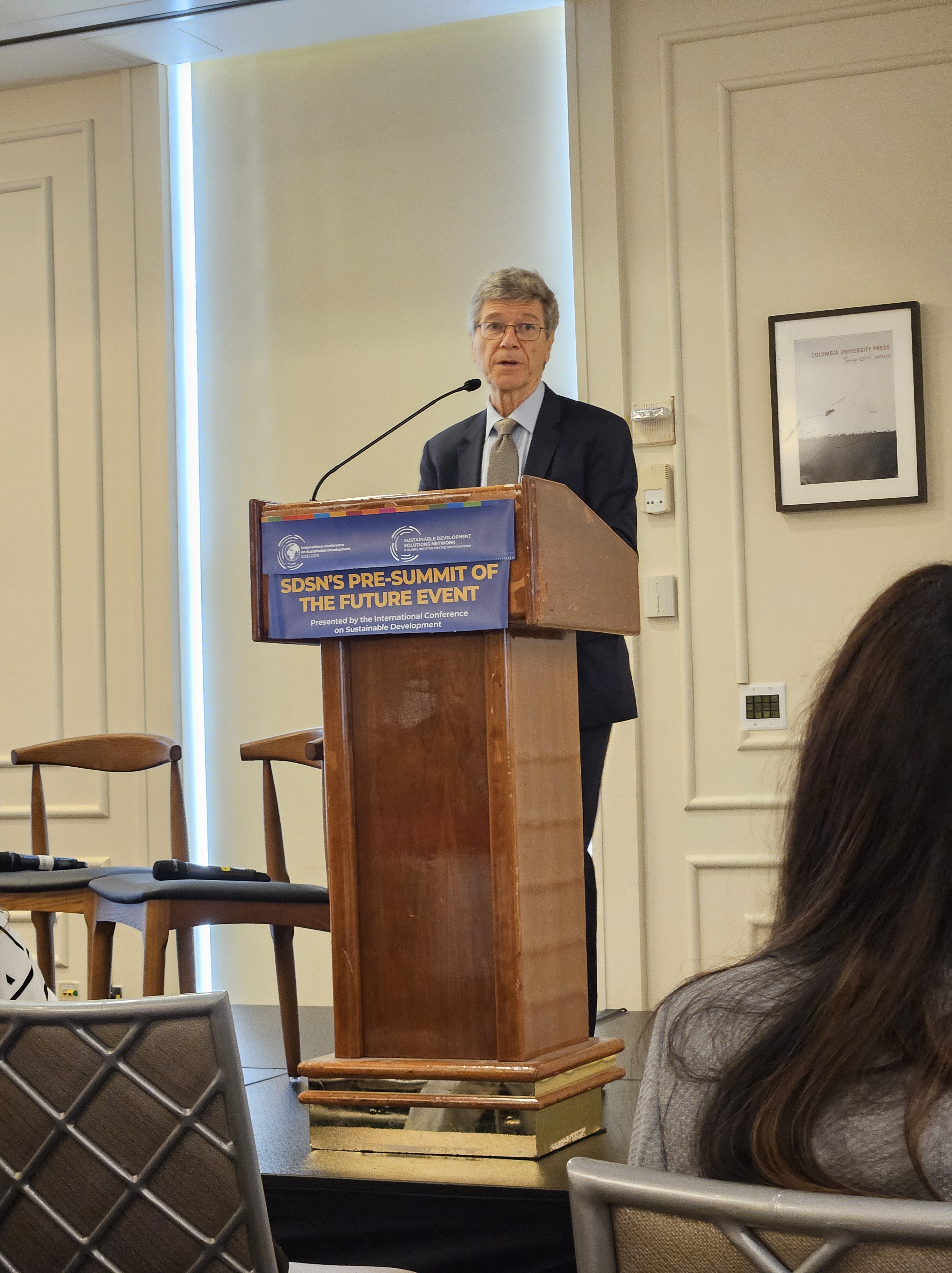
Dr. Jeffrey Sachs speaks at the Pre-Summit of the Future at Columbia University, September 2024
Amidst the gloom, glimmers of progress shine through:
On September 21st 2024, the International Day of Peace, as part of the UN General Assembly Action Days, I was struck by the comments of Juan Manuel Santos, Former President of Colombia and 2016 Nobel Peace Prize recipient. He noted the strong connection between health and peace when he observed the way in which the civil war conflict in Colombia changed over time. As he said, “when soldiers were taken to hospital instead of being killed, it changed the dynamic: when one could trust that the other side would respect their humanity, the level of trust rose on all sides. The ‘enemy’ became human.”
Similarly, in 1859 when Swiss businessman Henri Dunant heard the cries of the wounded on the plains following the Battle of Solferino and called for a halt in the fighting to organize aid, a shift took place that changed the world forever. Dunant’s proposal to create national relief societies to provide neutral and impartial care during conflicts led to the formation of the International Committee of the Red Cross in 1863 and the adoption of the first Geneva Convention in 1864. Ever since, heeding the needs for health has been a powerful lever for upsetting the vicious cycle of violence. In September, fighting was paused in Gaza to enable the vaccination of 640,000 children from the scourge of polio. This effort was not an outlier: the World Health Organization has assisted with vaccine drives during humanitarian crises in many other parts of the world, including the Congo in 1999, where the immunization-related days of tranquility enabled the vaccination of 80% of 10 million children younger than 5 years.
To break the cycle of violence and create a healthier, more peaceful world, we must:
1. Deploy dedicated health diplomats to navigate the geopolitical minefield
2. Revitalize human rights and the Geneva Conventions, prioritizing protection for healthcare workers in conflict zones
3. Boost Official Development Assistance (ODA) for health systems (currently a paltry 0.37% of OECD GNI)
4. Educate relentlessly on the health-peace connection
The Pact for the Future offers a chance to recognize that investing in health creates a powerful multiplier effect on peace. It’s time to move beyond lofty declarations and take decisive action. The future we promised to safeguard is now, and it’s slipping through our fingers.
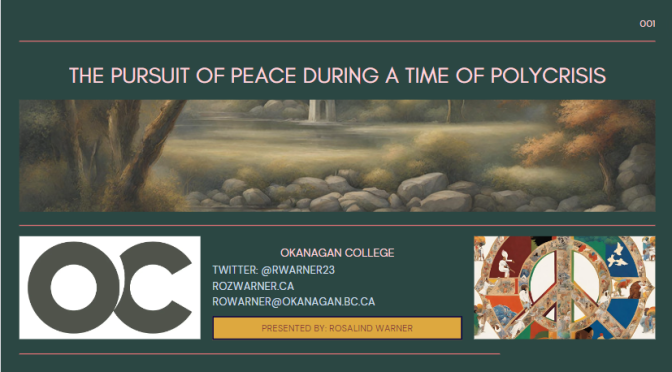
Governments have claimed to be pursuing peace since time immemorial, with seemingly little progress to show for it. Numerous treaties, declarations, laws and covenants have been signed to eliminate war or reduce its effects, yet societies continue to fight and to suffer, despite these efforts. In this talk, we will survey the historical benchmarks of war and peace in world politics, consider where things went wrong, and speculate about how peace might be achieved in the context of an ongoing global crisis.
This talk will delve into the historical context, current challenges, and future implications of this powerful form of civic action. What are the ethical dilemmas of civil disobedience? What might be the effect of disruptive technologies on state surveillance and the balance between security and individual freedoms? Talk on November 10, 2023
Southern Resident Orcas are critically endangered despite legal protection
on KSQD 90.7 FM, KSQT 89.7 FM, K207FE(FX) 89.5 FM and KSQD.org
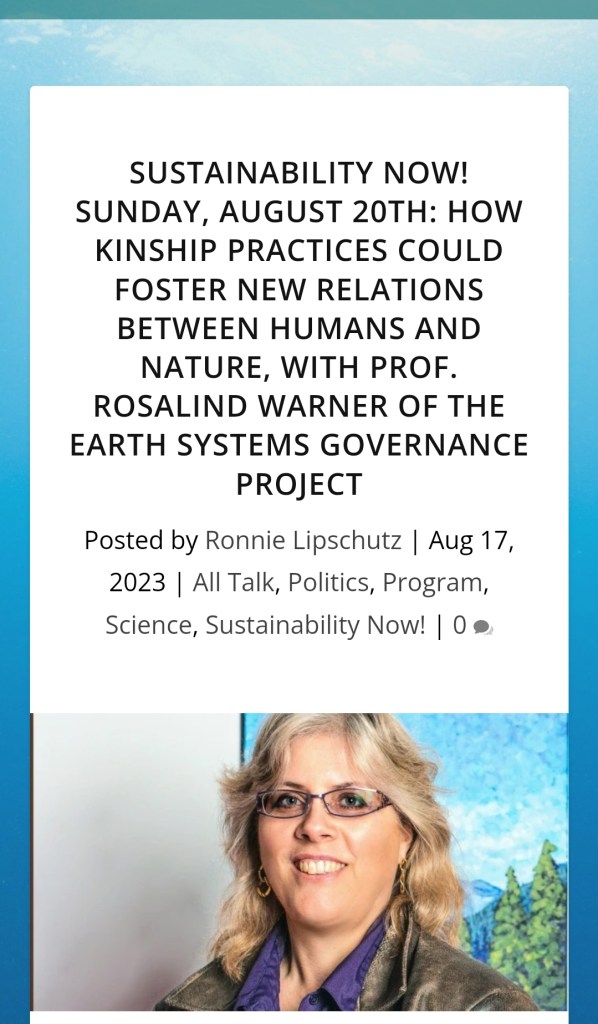
The Rights of Nature is one way to rethink the relationships between humans and Nature, but are there other ways to think about those connections? Join host Ronnie Lipschutz for a conversation with Dr. Rosalind Warner, professor of political science at Okanagan College in British Columbia and Research Fellow with the Earth System Governance Project. Warner is studying the role of kinship metaphors in Earth System Law, with kinship connoting more ethical relationships among humans, Nature and earth’s non-human inhabitants. Earth System Law is an emerging body of legal precepts, principles and practices that bring together ethics and law with the planet’s dynamic physical and biological cycles. Tune in to hear a new take on human-nature relations.
This post is inspired by a short conversation I had months ago about climate change. It went something like this:
Hello passerby, do you want to learn more about sustainability?
Passerby: why yes, I am very interested in that topic. I always keep a clean house, I compost so I don’t waste food, I ride my bike as much as possible, and I use organic products, so I am definitely living sustainably.
Me: that’s interesting and very commendable! Have you thought about how you can contribute to the cause?
Passerby: well, I feel like I’m doing everything I should, and if everybody lived the way I do, we’d all be better off, but I can’t tell other people how to live. Besides, all that stuff about climate change just doesn’t seem to be based on fact.
Since ‘the great hunkerdown’ began, I’ve been thinking about this point of view alot. I see similar, if more extreme, ideas being circulated in the media. There’s an invisible line drawn between ‘my world’ and ‘what I’m responsible for’ and ‘the world of others’ and ‘what they are responsible for’. An individualistic approach to problems is our reflexive reaction in the Anglo settler countries of the developed industrialized world. Individualistic liberalism dictates that the line of ethical responsibility for others is determined by each person, as they make free decisions based on their own values and interests.
There’s something to be said for the power of this idea and its influence on liberal culture. After all, it is liberalism which first originated the modern language of rights and constructed a political space for imagining an ethic of agency which has been highly effective, at least within its own parameters.
It is appropriate to imagine that collective problems can be solved by individual action, indeed it is difficult to imagine how any progress can be made absent people ‘buying in’ to it, for example by changing their own consumption patterns.
Those countries around the world that ignored individual freedoms in favour of panicked enforced lockdowns in response to the pandemic will likely pay a high price in legitimacy, which will be costly in the end. Those countries that have enjoined their populations to ‘do the right thing’ have implicitly drawn on people’s genuine fears of their own contagion rather than a commitment to civic duty.
In the developed world, we should all pay deep respect and homage to the Italians for their sacrifice in helping us to learn that we were vulnerable. However, those countries that have relied almost exclusively on fears, without any reference to civic duty, have fared even worse than Italy, because in a liberal culture the absence of a sense of civic duty means that individual freedoms end up trumping everything else. Now more than ever, the paradoxical nature of individual freedom, based on a confident sense of security and separateness, is being laid bare.
It is liberalism which first originated the modern language of rights and constructed a political space for imagining an ethic of agency which has been highly effective, at least within its own parameters.
The gaps and limits of liberalism are being made visible, even obvious, as the logic becomes extended to its absurdities and extremes. Why not me first? Why care about others, isn’t that their job? My house is in order, I am healthy, I am reducing my footprint, I’m doing the right thing, I’m not the threat, why do I have to pay a price?
A really clear gap of liberal culture as it lives today, is its lack of any distributional ethics. Liberal thinking is essentially blind to the question of how security, or any other value, should be distributed. Since the only value worth distributing is individual freedom, and the only way to measure it is by each persons’ values and preferences, there is little to no room for considering exactly how equitable social distribution might actually work to enhance individual freedoms. The idea that each person’s freedom will be enhanced when decisions are made equitably, with the collective interest in mind, is alien and foreign.
The passerby who cares deeply about the cleanliness of her own household, and believes she alone deserves the benefit of her efforts, is blind to the myriad ways in which her choices are supported by the collective decisions of the past (and the present) that have made those choices possible. Indeed, the entire institutional structure of individual choices enjoyed today by those who most strongly defend their ‘freedoms’ has been made possible by the collective decisions of societies in the past (not by individuals). Ultimately, in history, it is only collective action that lasts, since the length of individual lifetimes is too short for leaders to see their ideas become permanently embedded. Thatcher had it exactly wrong: it’s not that there is no such thing as society, in the end there is only society.
Ultimately, in history, it is only collective action that lasts, since the length of individual lifetimes is too short for leaders to see their ideas become permanently embedded. Thatcher had it exactly wrong: it’s not that there is no such thing as society, in the end there is only society.
The cracks in this edifice are showing. The maldistribution of security, including the inequitable distribution of (in)vulnerability, is becoming glaringly obvious. The invisible line between ‘immunity’ and ‘vulnerability’ is being revealed for what it is: a collective construction. Immunity/vulnerability is a paradox. Immunity is always dependent, derivative of the vulnerability of and to others. The confidence in individual choice that liberalism empowers is at its core a function of the maldistribution of social vulnerability. Immunity can never be ‘just for me’ if it is to be a real thing and not an illusion or myth.
My protest to be mask-free is predicated on the existence of modern medical knowledge, nurses, doctors, and ventilators which can catch me if I fall. My resolve to open my business profitably is predicated on the willingness of customers to take risks AMA (against medical advice). All of this means that I have to be very strident to convince enough of the community to my side if I’m going to make a go of it.
My sense of safety in my own home, my ‘home immunity’ is predicated on the risks and vulnerability of service workers, first responders, grocery clerks, truck drivers, payroll clerks, meat plant workers, sewage workers, and an army of government employees. My insistence that I am only responsible for my own house is predicated on the edifice of social protections that society has established collectively. This edifice includes the effort and sacrifice of climate activists who may eventually contribute to finding a collective solution to the threat of climate change without my help.
If and when solutions are found, as a liberal focused on the ethics of individualism, I would have no qualms in making a claim for the immunity created by the vaccine for myself and my household. Similarly, I would have no qualms about defending my right to enjoy the benefits of a livable planet, including my freedom, as long as someone else pays the price. The question is, would anybody care enough about me to listen?
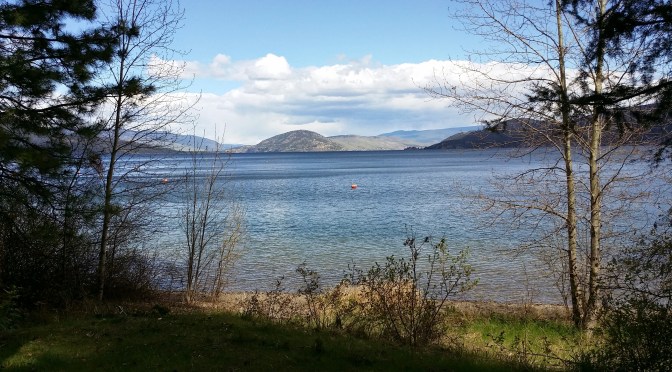
In the community I come from, life centres around Okanagan Lake. The Okanagan Valley is a spectacular vista of rounded hills, distant mountains, sparkling waters, and a unique ecosystem for human and non-human life to adapt and thrive.
Despite its apparent permanence, the Valley and the Lake are fragile and vulnerable ecosystems experiencing accelerating pressures from unsustainable patterns of settlement, travel, and economic development. The Valley is vulnerable to insect damage, invasive species, extinctions, drought, fire, flooding, and water contamination. Virtually all of these threats arise from human activities in one way or another.
Looking at it from a birds’ eye view, the Valley is a whole ecosystem, yet the laws that govern it, and those that determine its future, are piecemeal. As I have written before, movements to protect the Valley and the planet can build on holistic thinking using the political and social revolution in human rights. ‘Rights language’ can be used to transform the current framework of laws, policies, and decision making procedures that govern development.
The Valley is a whole ecosystem, yet the laws that govern it, and those that determine its future, are piecemeal.
The progress of human rights is one of the most vital political stories of human history. The broad recognition of rights has a natural logic of expansion and consolidation. Progress comes in waves and is often beaten back by counter-movements, nevertheless, rights language often reemerges in new clothes when violations are at their worst. Violence and abuse trigger a reaction toward conscience and care, and new rights become recognized and affirmed following the worst atrocities.
What does ‘rights language’ bring to environmental causes that other arguments may overlook? Arguments from science, expertise, economic interest and values are sometimes disembodied, ephemeral, remote. An appeal to ‘rights’ triggers foundational debates: the questions become fundamental to identity and society because many rights are enumerated and protected by constitutional law, and because Canadian society has made a point of ensuring that people know and understand what rights are.
As Canadians we also understand that rights have intrinsic value. Most agree that we would prefer to live in a society that recognizes and respects rights, rather than one that does not. While we may not all comprehend the statistical probabilities of climate models or the technicalities of a carbon tax as a policy instrument, we understand ‘rights’. They are a thing. Rights are personal.
Rights are powerful because they are inherently subversive and simultaneously affirming. Raising an issue of water as a right raises questions about the status quo. What are all of the ways that water is freshened, used, transferred, polluted, and acted upon? It prompts rethinking the economic premises of water management. Rights language also prompts us to recognize the intrinsic value of existence. In other words,the recognition of a right elevates the ethical value of a rights holder in the view of the government and society. For example, the right to exist is one of the most fundamental rights possible. A right to exist implies the logical necessity of respecting that existence by not threatening or undermining the integrity and dignity of the rightsholder.
While we may not all comprehend the statistical probabilities of climate models or the technicalities of a carbon tax as a policy instrument, we understand ‘rights’. They are a thing. Rights are personal.
Rights language is also ethical and cultural. The current imbalance between human development and natural protection, evidenced by the global scale of pollution, is at least in part a product of the tendency to view nature in purely instrumental terms. In Western cultural constructions, nature is inert, a dumping ground for human wastes, or a storehouse of potential resources ready for extraction. Nature has not even been seen as a player in the cycle, much less as a rights holder.
The degradation of nature is simultaneously and unavoidably the degradation of humans. Since nature is a closed system, wastes and depletion will circle back to impact human welfare. The Anthropocene is signalling not the supremacy of humans over nature, but rather the exact opposite: the re-embedding of humans back into nature. We are now as much a product of our own activities as we are of natural processes. The world is now fully ‘human’ in at least one sense: the fates of human and nonhuman alike are interlaced in a way not seen before in history. Human and nonhuman fates are planetary in scale.
Restoring balance means revisiting the roots of the gap between humans and nature, the original split that divided the world and made degradation possible, and even celebrated it. That split is symbolized in three ways: 1. the assumption of anthropocentric dominance, 2. the neglect of nature’s intrinsic value, and 3. the separation and distancing of humans from the ecosystems that sustain them (both physical and psychological) .
Laws and politics have tended to wipe nature out of the ethical universe by limiting legal standing to parties with property interests. In other words, the legal conversation about value, loss and damage takes place only among those who are deemed to have an interest, namely, property owners. Even the representation of the public interest is narrowly circumscribed by the necessity of showing direct property-like profits or losses, rather than a public interest in a long-term trust relationship with nature.
While present and recognized in law, the notion of a public trust has not proven to be an effective shield against destruction in the long term, primarily because it can always be trumped or replaced by a new property claim. In addition, property claims are themselves partial since they divide nature up into parcels of utility based on their value to particular property interests. Sky, land, water, and underground are all seen in terms of different types of access, use, and ownership rights.
Solutions to this problem already exist in law, but they are currently found only in isolated and disjointed legal opinions and cases, both locally and around the world. Recently the question of nature rights has risen in prominence in political discussions, partly due to the rising awareness of the planetary nature of environmental damage being experienced in the Anthropocene, and partly due to the increasing recognition of indigenous rights and the distinctly contrasting worldview of nature that such rights represent.
The Whanganui River decision in New Zealand, the rise of Buen Vivir in Ecuador, the Ganges decision and others are pushing back against the notion that nature is nothing more than property, sink, or resource. At the heart of this counter-narrative is the recognition that humans and nature are together, with common fates and interests, and that the inclusion of nature as member of the human family, worthy of respect, care and affection, is essential to human survival. This is represented by indigenous worldviews in varying ways around the world and set down in the UN Declaration of the Rights of Indigenous Peoples as well as many other international legaldeclarations and treaties. Both humans and nature have a right to exist, what is needed (even if it is a first step) is the recognition and affirmation of these new rights in politics, law, and development planning.
This is no small thing, so what are the problems? One may object to the recognition of nature as a rights-holder on various grounds. One objection is that extending rights to nature means the diminution of existing human rights. However, this is not a new argument. This argument is familiar to historians, who documented them in response to the expansion and extension of rights to slaves, women, unpropertied males, and ethnic and religious groups. In every case the historical extension of rights did not result in the reduction of existing rights protections, but instead allowed for the more fulsome exercise of existing rights. This is because the pattern and framework of rights growth reinforces and legitimizes that a universe of moral beings and rights holders exists and is deserving of respect.
Another objection is that nature rights are expensive. Indeed, it is hardly arguable that valuable social and political goals are costly. The question of how to pay for rights has rarely been a strong argument against the recognition of rights, however. Few would argue today that the cost of freeing slaves, or protecting children from abuse are not worth the price of rights enforcement. As well, the social, political and even economic benefits of rights recognition spill over into remarkable new avenues of growth and development. Protecting the right of the lake to flow, to provide recreation and fish and a rich environment has immense economic benefits that should also be taken into account when considering the balance sheet of rights recognition.
Finally, a last objection is that recognizing the rights of a lake necessarily undermines the value of other beings who may be more ‘appropriate’ or ‘deserving’ of rights due to their similarity with or affinity for humans. Why should lakes have rights that are not extended to whales, elephants, monkeys or dogs, all of whom demonstrate more ‘human-like’ characteristics such as family relationships, intelligence, and emotions and feeling? What about microbes or farm animals? What about Mars or the moon or other distant territories? Why lakes and not mountains, or deserts, or garbage piles?
These are all valid and complex issues which should be deliberated and which will likely be decided and come before the courts in the next few years. Awareness is growing about how humans and nonhumans should be governed in a truly planetary ecosystem. It’s important to keep in mind that rights recognition is about governing human action, limiting and allowing different kinds of human interaction with the nonhuman world.
Such rules governing human interactions with the nonhuman world already exist, whether they are laws against animal abuse, or rules about mountain climbing or fishing or logging or nature reserves. The issue is that these rules are currently one-dimensional, shaped disproportionately by property and the need to prove an interest in that property. The rules are insufficiently permanent and not based on inter-generational ethics, and they rely on an out of date worldview of nature, one that is amply demonstrating its failures to protect humans and nature every day.
Rights recognition is about governing human action, limiting and allowing different kinds of human interaction with the nonhuman world.
Rights for lakes will help the larger conversation about how to move beyond the exclusiveness of property, to recognize the limits of the planet and the power of nature to act on human societies. Rights for lakes will reiterate the intrinsic value of the nonhuman world. They won’t solve every problem, but not much can be started without them.
Its been a tough time for practitioners of what I’ll call the Social Arts & Sciences, and for analysts of political affairs. For example, reputable pollsters were totally wrong in predicting the election of 2016, pretty much destroying any confidence in the utility of analytical methods like survey research. Of course, most consumers of polling data can’t be expected to know the difference between the use and interpretation of quantitative data for research, and the kinds of reckless extrapolation that posed as expert and authoritative analysis leading up to the election. So, it seems that social scientists have some tasks to do. As a community of thinkers and teachers about social affairs, the Social Arts & Sciences have a unique set of tools for understanding world events that can shed light on important questions. Like any tool, the value of analytical methods is only as good as the use they are put to.
Illuminating who we are as social beings, and why we do what we do, can bring improvements to our shared experience by enabling changes in social behaviour through learning, but only if done carefully and deliberately, and with a great deal of humility and caution. I’d suggest these following lines of inquiry, but what I can’t do is help sounding like a stuffy, elitist, out of touch intellectal to some. This is an occupational hazard, but one I’ll have to live with. Sorry about that. Here are some lines of inquiry suggested by recent events:
1. Political Science
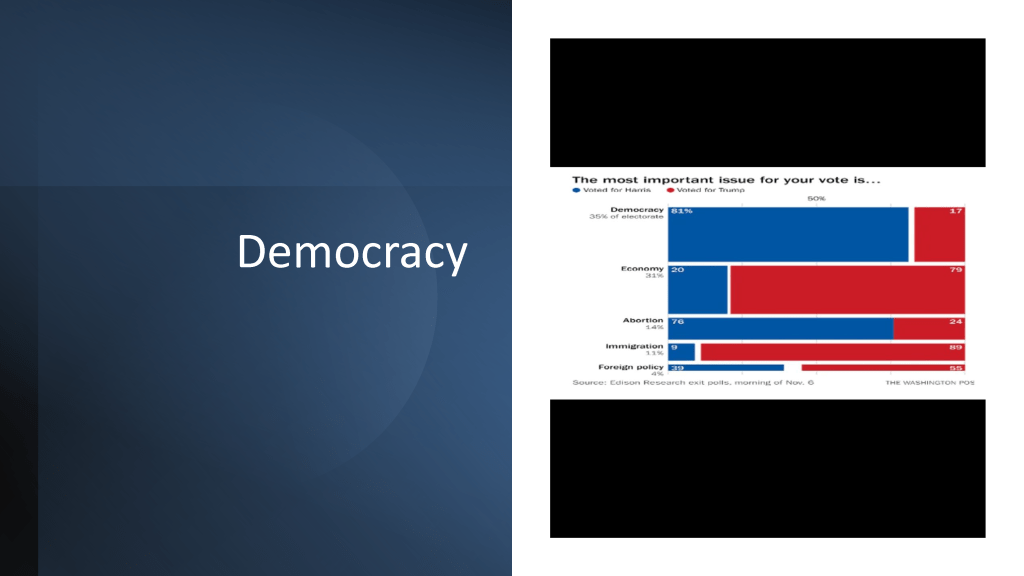
Ok this one’s mine. Please, political scientists, explain clearly the difference between democracy and liberal democracy. Liberal democracy is a paradox, since the rule of law and constitutional protection of human rights necessarily limits democratic rule. Another way to think about it is that minority protections make democracy possible by ensuring that the people do not abuse their power, and in the process, potentially vote themselves out of power. Law needs democracy and democracy needs law. They are inextricably bound together. The rights of minorities are integral to the maintenance of democracy, not an add-on that can be jettisoned in the name of the majority or for the sake of convenience. Protecting minority rights is what enables democracy to function, and to sustain itself. Compromising minority rights inevitably compromises democracy itself. Protecting minority rights protects everyone.
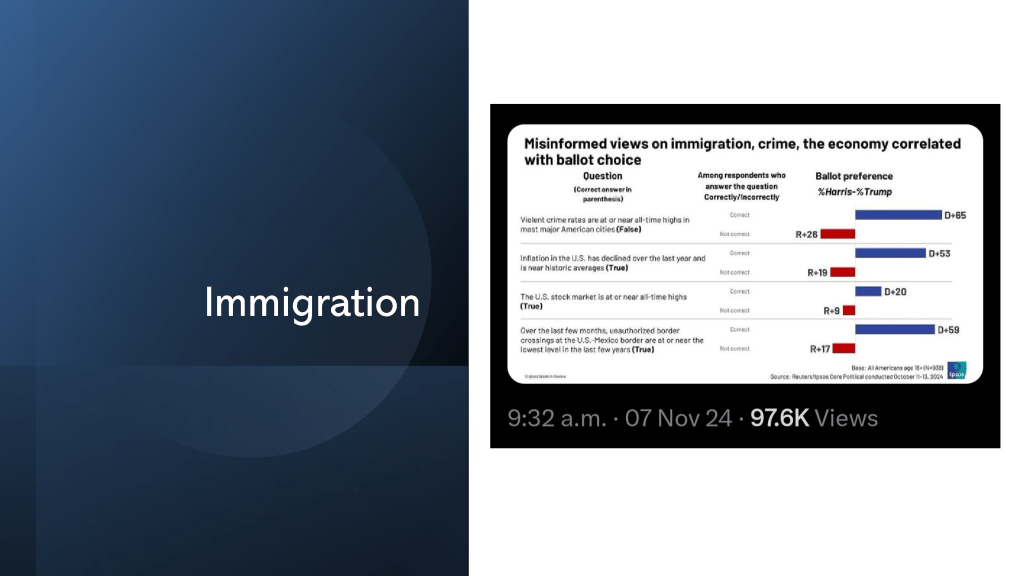
While we’re at it, please explain what polls actually measure, what they don’t measure, and what their limitations are (and I don’t mean margin of error). Everyone: (yes that means you)…I’m sorry, but you have to take statistics. We all did it, so you have to too. There.
I’m throwing questions about the Electoral College to the historians. It makes no sense.
A bonus suggestion for Philosophy: help everyone understand paradoxes better.
2. Gender and Womens’ Studies
I would like to understand better the dynamics of ‘alpha male’ social behaviour. I don’t even know if that’s a thing, but it kind of looks like what we’ve been observing. If I’m wrong, can you please school me in another way of understanding why so many thinking, otherwise respectful people (men and women both) willfully compromise themselves and their values when faced with powerful but flawed male figures? An extra job for sociologists: help us truly understand the centrality of identity to pretty much everything.
3. Psychology
Following the 2008 economic crisis, a new subfield of Economic Psychology flourished to help explain why otherwise rational actors made irrational decisions, even against their own interest, and under what circumstances. I think we need more of that. Can psychology help us understand more about the dynamics of voter decision making, the processes of skapegoating, and the emergence of in-group and out-group division? What is the role of emotion as a motivation for decision making? We know that strong emotion can interfere with rational decision making, but how might this dynamic work at a community level?
4. History
Please keep telling analogous stories from the past to help give context to the problems of the day. Each generation still generates its own version of problems and solutions, but if people saw their issues as common and not unique, they might be better able to think creatively about how to apply the wisdom of the past to the present. Also, please focus as well on the peaceful, constructive periods of history where nothing much happened. The boring bits are what we can learn from. As well, can you please help us understand better what happens during times of accelerating and rapid change so societies can learn to be more adaptive? I have a feeling we’re going to need that.
5. Communications
Ok so you’ve got lots of work ahead…..propaganda has gone viral, driven not by large organizations but by individual users. Consumers are now transmitters. Conversations are immediate and global. Has the speed of communication outpaced democracy? Please talk to the psychologists about the effects of this on thinking, can we know more about how our social lives and worlds create our reality?
6. Artists and Writers
Please keep reminding us what it’s like to be someone else. Touch our hearts with stories of people and places different from our own experiences, so that we can develop empathy and awareness, even for a minute. Teach the teachers how to convey this effectively. Educate all of the social scientists about the importance of empathy to learning and growing and advancing knowledge about the world and ourselves. Ultimately, this is the only way humans truly learn.
















 Dr. Rosalind Warner
You must be logged in to post a comment.